The Story
Why it exists.
The beginning
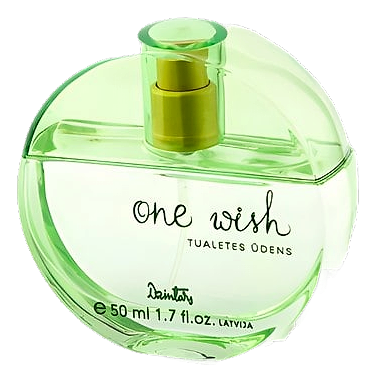
Dzintars released One Wish in 2012, a year when the house was still building on its century of Baltic perfumery without much concern for what the rest of the world was doing. The name carries something intentional, a single ask, a quiet hope, a fragrance distilled to its most essential wish. For a house built on endurance rather than novelty, the idea of distilling a desire into scent fits the character. This is not a fragrance that announces itself. It arrives. It stays.
What makes One Wish structurally interesting is the anise. Most floral compositions sidestep spice entirely, or bury it under sweetness until it disappears. Here, anise sits in the heart alongside lily of the valley, violet, and rose, four notes that could easily become a powdery blur without something to give them shape. The anise is that shape. It doesn't shout. It frames. The melon in the top is the other quiet surprise: a watery sweetness that keeps the opening from becoming heavy, the bridge between spring brightness and something with more depth underneath.
The evolution
Lilac and mimosa arrive first, the opening is immediate, almost startling in how clean it is. For about twenty minutes, the composition reads as pure spring: dewy, bright, slightly sweet. Then the melon recedes and the anise enters. This is the turn. The lily of the valley follows, not with force but with presence, it softens the anise without erasing it. The violet and rose arrive together and the heart becomes something powdery and romantic without ever becoming heavy. The drydown is where One Wish earns its name. White tea and sandalwood settle close to the skin and stay. The vanilla appears in the last hour, faint and warm, the kind of finish that someone notices when you're close enough that it matters. On fabric, the florals linger for hours. On skin, count on four to six hours of quiet company.
Cultural impact
One Wish occupies an interesting space in the Dzintars catalog, not a statement fragrance, not a reformulation of a classic, but something built for the long game. In Eastern Europe, where Dzintars remains a household name, it found wearers who valued its quiet confidence over louder alternatives. The powdery floral character has broad appeal, and the anise note is unusual enough to generate conversation without becoming polarizing. Community reception skews positive: wearers describe it as a fragrance that gets noticed in the right moments, not the loud ones.