The Story
Why it exists.
The beginning
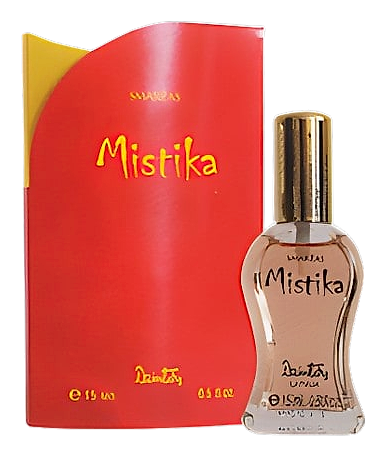
Mistika is a soft, powdery oriental floral built around Damask rose and a whisper of carnation, grounded by ambergris and warmed by tropical fruit. The name carries an immediate weight, something less floral and more weighted than the juice inside the bottle, and the juice itself reads as an accessible everyday composition. Damask rose sits at the center, but it's the kind of rose that has been softened, sweetened, and cushioned by powder rather than allowed to stand alone as a garden flower. Carnation adds a clove-tinged warmth underneath, the kind of spice that reads as skin temperature rather than kitchen spice. Tropical fruit lifts the top with a juicy sweetness, more suggestion than statement, the sort of opening that draws you in without demanding attention.
What makes Mistika worth a second look is the combination of neroli and Damask rose in the upper heart, two materials that don't often share space gracefully. Neroli brings a clean, almost soapy brightness that keeps the rose from sinking into syrup. Without that neroli lift, the Damask rose would have nowhere to breathe, and the whole thing would collapse into a sticky floral jam. Instead, the neroli acts like a window cracked open in a warm room, letting just enough air through to keep the bouquet feeling alive.
The evolution
Mistika opens with a bright burst of tropical fruit, juicy and slightly synthetic, think peach, mango, maybe a touch of pineapple, buoyed by neroli's clean floral edge. The first 15 minutes are the sweetest the fragrance will ever be, a short window where the fruit is loudest and the neroli keeps it from going flat. After that initial burst, the sweetness begins to recede and the cooler, more floral elements take over. The neroli fades first, making room for the heart to arrive with something warmer and more rounded. Damask rose and jasmine take over within the first half hour, joined by carnation's spicy, clove-edged warmth. This is the phase most people remember: a creamy, slightly soapy rose that feels more like a face powder than a garden flower. The jasmine is restrained, present but never indolic, lending depth without weight.
Cultural impact
Mistika occupies a particular place in the world of accessible oriental florals, the kind of scent that appeals to wearers who enjoy powdery, sweet compositions from the late 1990s and early 2000s. It draws a small but dedicated following, the sort of fragrance that gets passed between friends and surfaces in collections built around comfortable, wearable florals. For those who grew up around this style of perfumery, Mistika carries a certain familiarity, a sense of having encountered something similar before without being able to place it.