
The Story
Why it exists.
The beginning
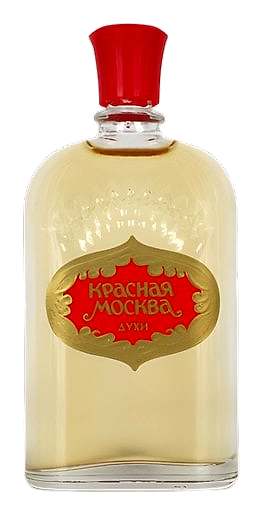
Krasnaya Moskva arrived in 1925 under the nose of Auguste Michel, working for Novaya Zarya in Moscow. The fragrance existed as one of the first to wear a Soviet name, and whether Michel was continuing work begun at the Brocard factory before 1917 or building something entirely new remains contested among fragrance historians. What matters is that the fragrance exists at all, a bridge between the French-influenced luxury trade of pre-revolutionary Russia and whatever came next. The composition carries the weight of that transitional moment, its florals heavy with Bulgarian rose and jasmine, its spices warm with carnation and clove, its base grounded in iris and vanilla.
What makes this composition structurally interesting is how it builds downward instead of outward. The pyramid moves from a bright, almost medicinal citrus opening, bergamot and coriander playing sharp against orange blossom's sweetness, into a heart that piles florals without apology: carnation's spice, ylang-ylang's tropical richness, jasmine's indolic depth, and rose all occupying the same space. Most Western compositions of the era would have stopped there. Krasnaya Moskva adds a base of iris and vanilla that doesn't just support, it defines. The tonka bean brings coumarin's hay-like warmth, but it's the iris root's powdery, violet-leaf quality that anchors everything.
The evolution
The opening hits bright and clean, bergamot's citrus sharpness cutting through coriander's herbal edge. Orange blossom adds sweetness, but it is a clean sweetness, not delicate, just present. Within twenty minutes, the florals take over. Carnation's clove-like spice rises first, followed by ylang-ylang's creamy fullness, jasmine's depth, and rose's quiet elegance. The heart is layered, almost baroque, each note asserting itself before yielding to the next. Then the handoff. Iris arrives with its powdery, violet-leaf character, softening everything, its root-like bitterness tempering the sweetness that came before. Vanilla and tonka bean warm the base, but they do not overwhelm, they settle underneath like a carpet, giving the whole composition weight without heaviness.
Cultural impact
Krasnaya Moskva is known to every citizen of the former Soviet Union. It carries emotional weight that most fragrances never achieve, the scent associated with a grandmother, a special occasion, a building lobby, winter in Moscow. The fragrance meant something different to everyone who wore it or encountered it, a reminder of moments that mattered, a marker of occasions worth marking. That kind of presence does not translate easily across cultures and generations, but it persists, woven into the fabric of how a region remembers its own history through scent.