
The Story
Why it exists.
The beginning
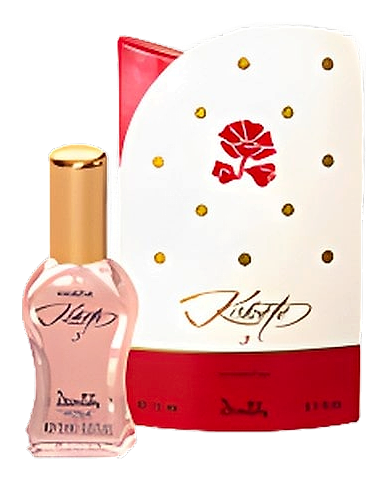
Koķete is a Latvian word, flirtatious, playful, a little teasing. Dzintars built an entire collection around the idea: Koķete 1 through 5, each interpreting a different shade of that concept. Koķete 3, launched in 2003, took the collection in a cooler direction. Bergamot and violet open the composition, bright, citrusy, with a powdery undertone that softens the edges. The rose arrives quietly, never demanding attention. Petitgrain and tea form the bridge between the cool opening and something warmer below. Sandalwood, cedar, and almond bark anchor the base. Dzintars formulated this as an everyday fragrance, something wearable across seasons, suitable for daytime, unpretentious but composed. It is, in that sense, the most restrained entry in the Koķete line: flirtation without excess.
What makes Koķete 3 distinctive is the tea note, not the green tea of modern fresh fragrances, but something more bitter and aromatic, closer to black tea steeped too long. Petitgrain amplifies that effect: green, slightly stinging, the smell of crushed leaves. Together with the citrus top, these notes create an opening that feels simultaneously bright and slightly medicinal. The florals, violet, rose, jasmine, sit above the structure rather than defining it. The base is where Dzintars shows its Baltic character: sandalwood and cedar are clean, slightly austere, without the richness of their Indian or South American counterparts. Almond bark adds a faint marzipan warmth that stops the wood from feeling cold.
The evolution
The opening hits fast, bergamot and violet arriving together, the lemon leaf giving a quick green flick before the citrus settles. Thirty minutes in, the tea becomes the story. That bitter, slightly dusty quality takes over from the sweetness of the top notes, shifting the fragrance from bright to aromatic. Petitgrain follows, adding a Neroli-adjacent bitterness that bridges the heart. The jasmine emerges around the one-hour mark, warmer than expected, threading through the green notes rather than dominating them. By hour two, the sandalwood and cedar arrive. This is the payoff: a clean, warm woody base that smells like freshly cut wood in a cool room. The almond bark keeps it from going sharp, a faint sweetness that rounds the edges. On skin, expect four to six hours of moderate sillage. On fabric, longer. The drydown is quiet, close, almost skin-like, musk and cedar that linger without projecting. The next morning, a faint woody trace remains, like the memory of a room that was just occupied.
Cultural impact
Koķete 3 occupies an interesting position in the post-Soviet fragrance landscape: a daytime floral-woody from a house with nearly a century of history, neither vintage in feel nor modern in construction. The community places it primarily as a summer and spring fragrance, 85% combined, with a strong daytime leaning. Enthusiasts who appreciate its aromatic, slightly bitter character regard it as a quiet, confident alternative to more obviously commercial florals.