
The Story
Why it exists.
The beginning
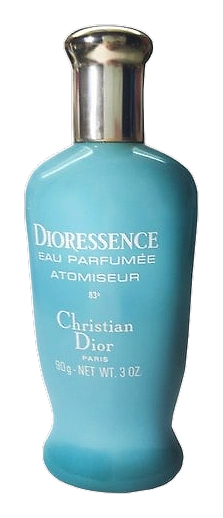
1969 was the year Guy Robert handed Dior something rare: a chypre composition that pushed against convention. Dioressence arrived as a fragrance that didn't soften its edges for mass appeal, built around contrast at every level of its structure. The top notes catch light through aldehydes and bergamot, an almost effervescent brightness that seems to challenge what's coming. Then a carnation-cinnamon-rose heart takes over, warm and spiced, floral but unmistakably weighted. The base of oakmoss, patchouli, and benzoin settles in with conviction, refusing to lighten up as the hours pass. Robert composed this in an era when chypres still carried their full weight in French perfumery, and the formula reflects that seriousness of intent without compromise or concession.
What separates Dioressence from its chypre cousins is the sheer density of the heart. Nine materials compete for attention: carnation brings its clove-like spice, cinnamon adds sweetness with edge, while rose, jasmine, tuberose, and ylang-ylang form a floral cushion underneath. The orris root and violet give it that powdery-cool undertone, a hush beneath all that warmth that keeps the composition from collapsing under its own intensity. Geranium bridges the floral and spicy halves, bridging rose and clove with a green-aromatic thread that holds the structure together.
The evolution
The opening hits with aldehydes, a vintage sparkle with an almost effervescent edge before the green notes and bergamot settle in. That bright moment unfolds briskly and a little bracing, before the warmth arrives from underneath. The carnation and cinnamon take over mid-fragrance, turning the composition rich and spiced, the florals underneath gaining weight like they're being pressed into wax. As the hours pass, the patchouli and oakmoss assert themselves, and the whole thing shifts from spicy-floral to something darker, earthier, almost resinous. The styrax and benzoin add a smoky-vanilla undertone that lingers quietly at the base. Eventually what's left on skin is mostly moss and a trace of sweetness, quiet but persistent. Throughout its wear, the fragrance seems to tell different stories as it moves through its phases, each layer revealing what the last one hid.
Cultural impact
Dioressence sits in a specific corner of fragrance history as a chypre of considerable density and conviction, a composition that represents the perfumery of its moment without softening for broader appeal. Collectors and enthusiasts recognize it as an example of late-1960s French perfumery at full strength, the kind of formula that doesn't ask permission to be heavy or warm or spiced. It wears like a vintage piece, dense and uncompromising in the way that older compositions often are.