
The Story
Why it exists.
The beginning
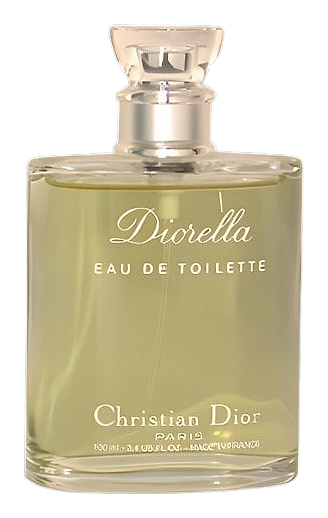
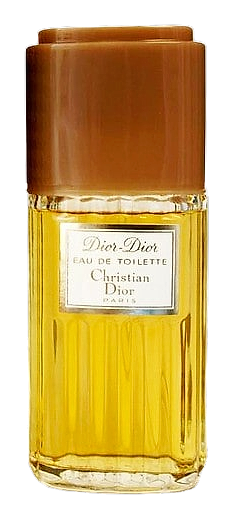
Edmond Roudnitska built his career on the citrus-chypre family, compositions where overripe fruit meets mature flowers, where restraint gives way to something almost lewd. Dior Dior arrived in 1976 as the fourth in Roudnitska's sequence of chypres for the house, following Femme, Diorama, and Diorella. The name itself is a statement: a doubling down on identity, on what Dior already was. Not a reinvention. An insistence.
The yellow flowers, narcissus, lilac, lily of the valley, carry unusual weight here. In most chypres, they orbit the structure. In Dior Dior, they become the structure. The aldehydes give them lift, the oakmoss and amber keep them from floating away. It's a composition built around what flowers smell like at the peak of their moment, before they begin to fade, held in place by the cool mossy base that gives chypres their name and their authority.
The evolution
The opening hits bright and metallic, aldehydes announce themselves before anything else. Cold. Precise. The kind of first impression that says the 1970s were not subtle. Lilac and jasmine arrive before the heart notes fully establish themselves, a brief sweetness caught between the aldehydic lift and the yellow flowers below. Over the next several hours, narcissus, lilac, and lily of the valley take over the middle of the composition. The amber warms what could have been too green. The florals don't soften exactly, they settle, becoming luminous and close to the skin rather than projecting outward. The drydown belongs to oakmoss and amber. The florals recede. What lingers is earthy, intimate, warm, something that stays near rather than announces. On fabric the next morning, a faint woody trace remains, the amber almost invisible but still present, like the memory of a room someone just left.
Cultural impact
Roudnitska composed four major citrus-chypres for Dior, Femme, Diorama, Diorella, and Dior Dior. The 1976 release sits at number three in that sequence, appreciated by those who know the lineage. Collectors and fragrance historians recognize it as a quieter, more contemplative piece compared to its siblings, not as extroverted as Poison, not as immediately seductive as J'adore. Dior Dior has found its audience among those who seek the house's more demanding work.