The Story
Why it exists.
The beginning
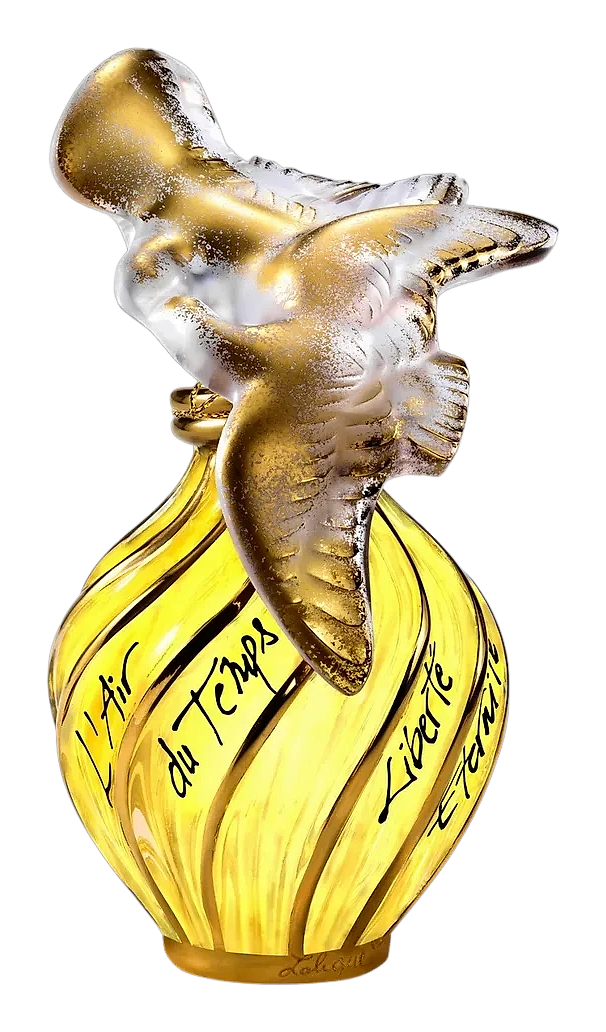
L'Air du Temps L'Aube arrived in 2016 as a quiet departure for Nina Ricci. The original L'Air du Temps, born in 1948, had become one of the most recognizable florals in French perfumery, anchored by its Lalique crystal doves and a carnation-rose heart that defined generations of romantic scent. L'Aube, dawn, offered something the original never aimed for: stillness. Calice Becker, the perfumer credited with the composition, set out to translate L'Air du Temps into a register the original had never touched, a kind of morning stillness rather than midday bloom. The answer was a composition stripped back to its tender layer, the carnation and rose rendered in their softer keys, amber folded underneath like a blanket pulled higher.
What makes this composition interesting is what was removed. The original L'Air du Temps carried a carnation-rose heart that spoke in a brighter, more declamatory voice, a spicy floral built around presence. L'Aube keeps the carnation and rose but buries them in amber and apricot, skipping any opening sparkle in favor of an immediate, grounded warmth. Iris does the structural work instead, giving the florals a powdery, almost suede-like architecture that holds the whole composition together. The result reads less like a fragrance and more like the memory of one. Nothing here is new.
The evolution
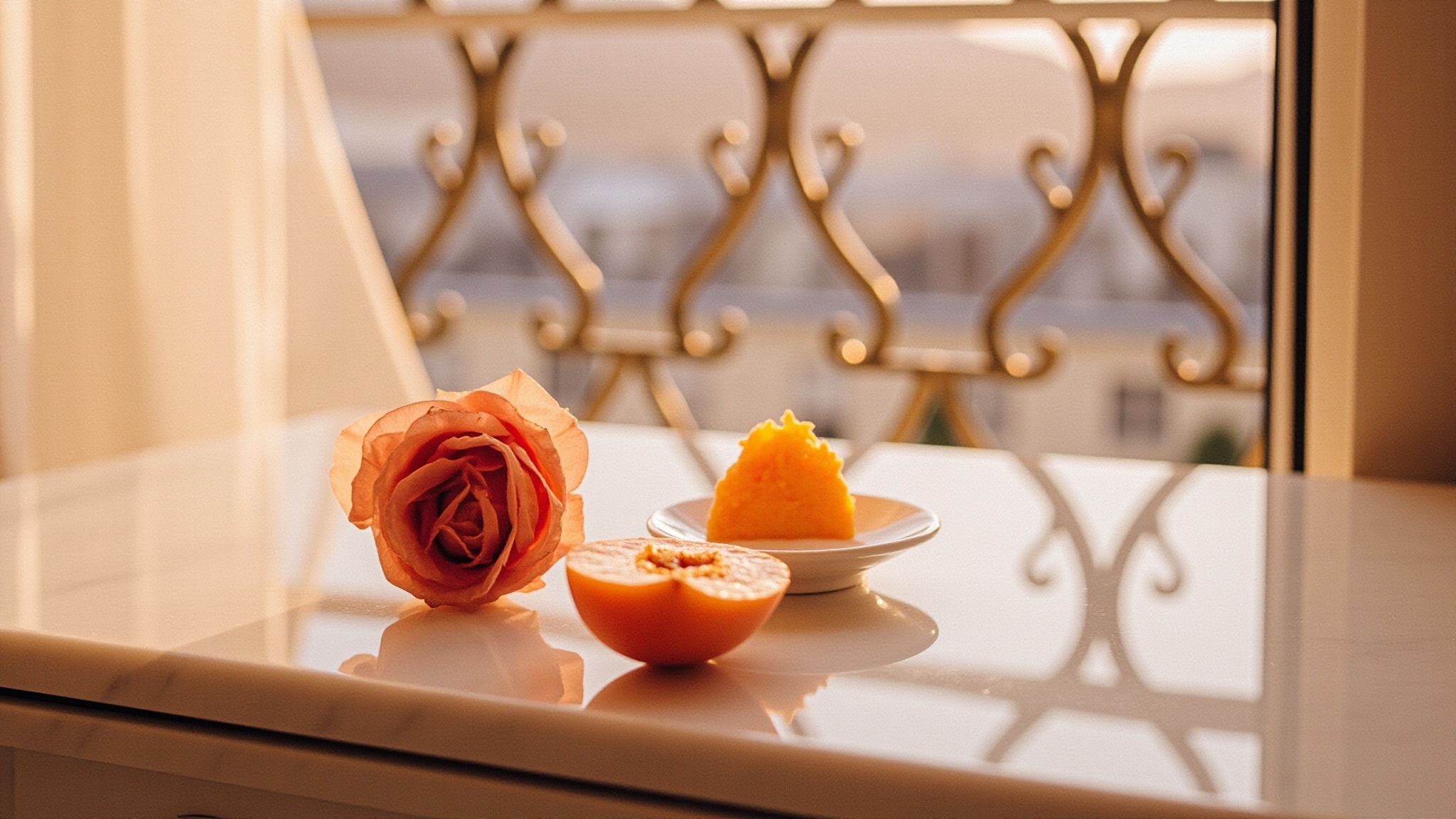
On skin, the apricot arrives first, surprisingly vivid for something called a dawn. It reads more like the fruit itself than a sugary note, a fleshy, sun-warmed ripeness that takes its time settling into the composition. The iris follows almost immediately, powdery and cool, brushing against the apricot's warmth without smothering it. Rose and carnation don't announce themselves so much as appear in the negative space between the other two, a soft floral murmur that gains presence as the minutes pass. The amber eventually takes over the lead. The florals don't vanish, they recede like a tide, leaving that golden, slightly resinous warmth pressed against skin. What lingers in the late hours, long after the brightness has gone, is iris and amber doing a final slow dance: cool powder against warm resin, the whole thing held in a skin-like hush. It wears close rather than wide.
Cultural impact
L'Air du Temps L'Aube sits in an unusual space within the Nina Ricci line. It is a flank of one of perfumery's most recognizable florals, and it treats the original not as something to copy but as something to soften, to hush, to round into a gentler silhouette. The carnation-rose architecture that defined the 1948 original returns, but it arrives wrapped in amber and apricot, held aloft by iris rather than announced by citrus or sharp top notes. It rewards patience and skin-time rather than first-spray impression, asking the nose to settle in rather than grab attention at arm's length.