
The Story
Why it exists.
The beginning
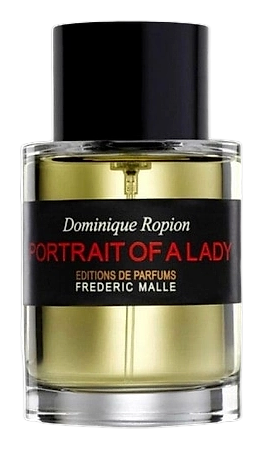
Portrait of a Lady takes its name from Henry James's 1881 novel, the story of Isabel Archer, a young American woman who inherits fortune and freedom only to find them a cage. Dominique Ropion and Frédéric Malle weren't interested in a literal adaptation. They wanted to translate the novel's central tension: the rose, luminous and immodest, trapped inside something dark and balsamic. The fragrance became their portrait of that woman, intense, unapologetic, shaped by contradiction.
What makes Portrait of a Lady technically remarkable is the proportion. Turkish rose typically appears as a supporting note, here it's the entire composition. Ropion didn't simply add more rose; he built a structure around it, letting clove and blackcurrant keep the florals from cloying while frankincense and patchouli anchor everything in smoke. The result is a rose that reads as both opulent and austere, the warmth of a greenhouse, the shadow of a cathedral.
The evolution
The opening announces itself immediately, Turkish rose at concentration levels that feel almost aggressive, with clove spice cutting through the sweetness. Within twenty minutes, raspberry and blackcurrant arrive to soften the edges without diluting the intensity. The heart phase is where the smoke takes over: frankincense rises from the base, and the rose stops being pretty and becomes something darker, more animal. This phase lasts for hours. The drydown is warm and woody, sandalwood and patchouli working together, with incense that lingers close to the skin but refuses to disappear. On most skin types, the base notes are detectable the next morning.
Cultural impact
Portrait of a Lady arrived in 2010 as a statement about what rose could be when freed from conventional restraint. It became one of the most discussed niche fragrances of its era, polarizing, admired, and often imitated. The fragrance helped define the 'dark rose' category that followed throughout the 2010s, establishing Ropion as a perfumer willing to push materials past their comfortable limits.