The Story
Why it exists.
The beginning
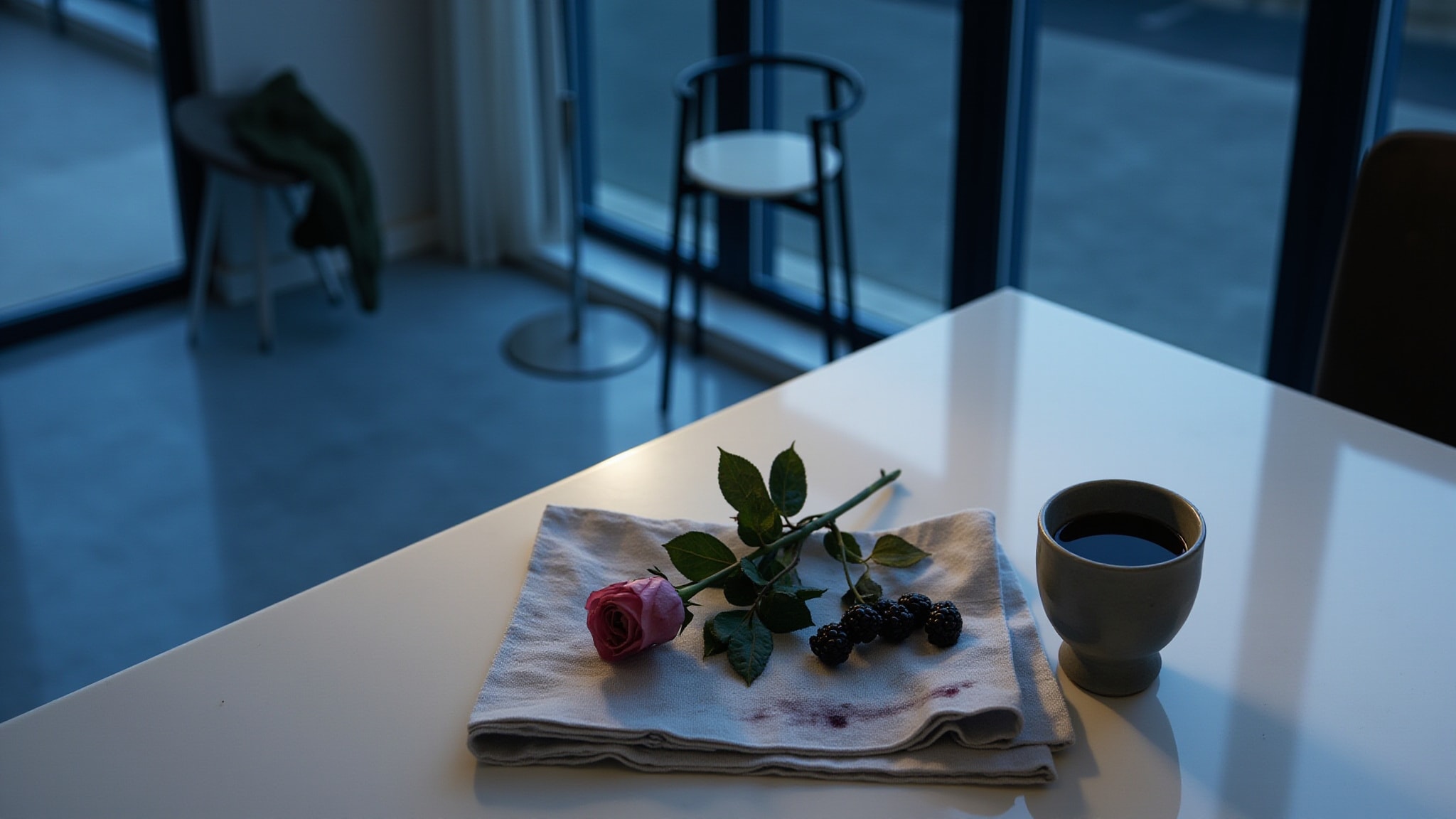
Roseberry came together in 1997 under Pierre Bourdon. The fragrance leans into the wild rose bush as its subject: petals, yes, but also thorns, leaves, the bruised sweetness of fruit dropping into the undergrowth. It takes a rose that hasn't been arranged in a vase. A rose you found while hiking, dirt still on the stem. The composition works because it refuses to flatten the rose into something decorative. Instead, it surrounds the flower with the same ecosystem it grows in: brambled, leafy, faintly fermented, alive. There's a rawness to the whole thing that feels intentional, like the perfumer wanted you to smell the bush before you smelled the bloom. That approach gives Roseberry a particular kind of presence. It's not delicate or polite.
The unusual move here is wine lees in the opening, a byproduct of winemaking rarely seen in fine fragrance. Lees carry a yeasty, fruity depth, something between crushed grapes and a warm cellar, and they give Roseberry its grounded sweetness. Paired with blackcurrant bud (that catty, green sharpness from the unopened fruit), chamomile for herbal calm, and aldehydes for lift, the fragrance opens with the texture of a garden after rain rather than a bouquet.
The evolution
The first thirty minutes smell like snapping a stem. Aldehydes flash, chamomile cools, and the blackcurrant bud cuts through with that unmistakable green bite. Wine lees hum underneath, adding a dense, almost fermented sweetness that keeps the sparkle from feeling thin. The opening has a fizzy, brambly energy, like carbonation trapped under leaves. Then the roses arrive, not one rose but a thicket of them: Turkish rose for body, eglantine rose for that wild, almost cucumber-fresh quality, raspberry leaf absolute adding an earthy-green astringency. Blackberry pulses through the heart, darker than the opening suggested, with a jam-like richness that thickens the composition. The drydown takes its time. Iris arrives with a powdery hush, sandalwood smooths everything out, and vetiver settles at the base with a dry, rooty finish that holds the whole composition together.
Cultural impact
Roseberry sits in an unusual space. It's niche enough to feel intentional, and specific enough that wearers describe it as a signature rather than a sample. The fragrance rewards people who already know they like green florals and frustrates those who want a clean, obvious rose. There's something uncompromising about the composition that filters its audience naturally. You either want the bramble and the leaf and the fermented sweetness, or you don't. The fragrance doesn't bend toward broader appeal. It stays true to its own logic, which is part of why the people who love it really love it. It doesn't perform for a crowd.