The Story
Why it exists.
The beginning
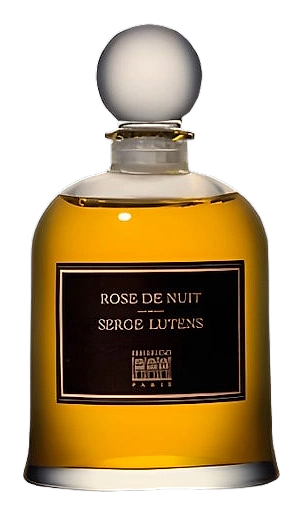
Serge Lutens worked with perfumer Gilles Romey to create Rose de Nuit in 1993. The brief was unusual: a rose that didn't behave like one. Inspired by the harem roses of the Alhambra, the Persian gardens of Isfahan, and Topkapi Palace, Lutens imagined something that transported rather than decorated. He called it a "sumptuous feminine flying carpet", a scent that could carry you somewhere else entirely. Not a literal garden rose. An imagined one. Slightly mythic, slightly forbidden, steeped in the romance of closed rooms and ancient walls. The result was dark from the start. Beeswax and musk anchored the composition, giving the rose a shadow it never quite stepped out of. Jasmine added a green, indolic edge. Apricot softened the blow just enough. This was not a fragrance that introduced itself politely at the door.
What makes Rose de Nuit unusual is the beeswax. Natural beeswax carries a warmth that synthetic honey notes can't replicate, a dusty, almost leathery sweetness that anchors the rose in something older than perfume itself. Combined with musk, it gives the fragrance an animalic quality that reads as skin-warm rather than synthetic. The apricot note doesn't behave like fruit here. It arrives muted, almost bruised, integrating into the beeswax rather than jumping out. And the jasmine, yellow jasmine, specifically, adds an indolic green depth that pushes the composition toward the sensual rather than the pretty. This is a rose that knows what it's doing. It doesn't announce itself.
The evolution
Rose de Nuit opens warm. Beeswax hits first, thick and enveloping, with rose arriving within seconds, not the bright Damascena opener you'd expect but something already embedded in the wax. Apricot follows quickly, a soft bruised sweetness that never becomes candy. By the 30-minute mark, jasmine emerges. The composition deepens. Amber and musk layer underneath, creating an animalic warmth that shifts the fragrance from floral into something more sensual, more present. The rose doesn't disappear, it becomes part of the architecture rather than the feature. Two hours in, the drydown begins. Sandalwood arrives, creamy and quiet. Musk persists as skin-warmth, the beeswax finally receding but never fully leaving. The amber holds on in the background, a quiet amber glow that doesn't push. By the fourth hour, you're wearing sandalwood and skin. Rose de Nuit becomes intimate, close, personal. It doesn't announce itself anymore. It stays. Lasting power is genuine, 8 to 10 hours on most skin. Sillage drops to moderate after the first hour, intimate after the second.
Cultural impact
Rose de Nuit has occupied its own corner of the rose category since 1993. Dark, animalic, intentionally challenging, it pushed back against the sweet roses that dominated its era and continues to divide opinion today. For those who love it, it's a touchstone. For those who don't, it's the reason they never blind-buy again. That kind of gravitational pull doesn't fade.