
The Story
Why it exists.
The beginning
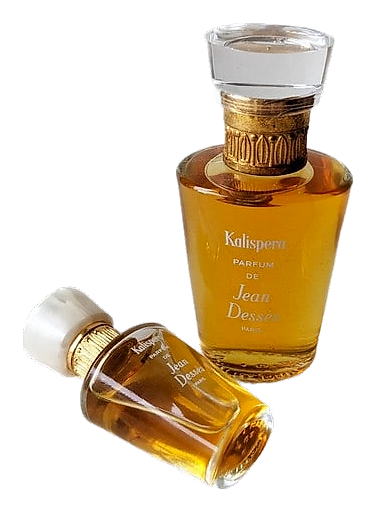
Kalispera means "good evening" in Greek, and Jean Dessès gave the word to a 1962 perfume that served as an olfactory greeting card. The scent captures something specific: the transition hour, when the sun drops and the city shifts register. Paul Vacher composed Kalispera, and the composition shows his hand with aldehydes handled in a particular way. There's a green-cold lift to the top, a brightness that feels architectural rather than soapy, controlled rather than walloping. The florals underneath carry weight without losing clarity. Kalispera sits among the handful of fragrances produced under the Dessès name, alongside Celui, Gymkana, and Eau Nouvelle, each extending the house's sensibility into a different register of scent.
What makes Kalispera structurally unusual is the way it stacks its green-floral top against a distinctly earthy, slightly dirty base. The top reads bright: hyacinth, lily, bergamot, orange blossom, tuberose, all underscored by aldehydes that sharpen the edges. But the base grounds the composition with vetiver, nutmeg, and a musk that carries that salty, slightly animalic edge. The leather and patchouli in the middle bridge those two worlds.
The evolution
The first thirty minutes are a rush. Aldehydes lift the top, sharp and effervescent, and the hyacinth cuts through with a green, almost metallic clarity. Bergamot softens the edges while orange blossom and tuberose build warmth underneath. Lily adds a cool, waxy sweetness. The whole opening reads bright, lifted, almost sparkling, like cold water on sun-warmed skin. Around the one-hour mark, everything recalibrates. The aldehydes recede. Violet takes over, powdery and a touch melancholy, while carnation and jasmine bring a spiced floral depth. Leather appears here, quiet, more suggestion than statement, and the patchouli starts pulling the composition earthward. The chypre skeleton shows itself. By hour three or four, the florals have mostly faded. What's left is the base architecture: vetiver, dry and slightly bitter, nutmeg adding a warm, dusty spice, and musk that clings close to skin.
Cultural impact
Kalispera sits in a particular corner of mid-century French perfumery, carrying a salty musk base and a structural discipline that gives its florals real backbone. Wearers who find it tend to be the ones drawn to the slightly melancholy register of vintage violets, the green-cold aldehyde florals of the early postwar era, but with something darker underneath. The fragrance rewards attention: the green-floral top announces itself brightly, but the base is what stays on the skin and in the memory. That dual character, brightness above and weight below, is part of what makes it distinctive.