The Story
Why it exists.
The beginning
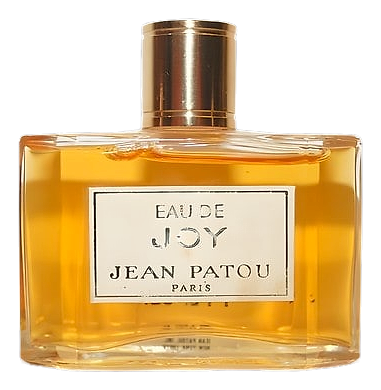
Eau de Joy arrived in 1953 as Jean Patou's answer to a specific moment in perfumery, when aldehydic florals were becoming the language of Parisian sophistication, but before they became safe. The house had already proven its fluency in floral opulence with Joy in 1932. Now it was time for something that carried that same richness but felt urgent, contemporary, almost confrontational in its confidence. The name itself is a declaration: joy as a full-volume experience, not a quiet background hum. What Patou created was a fragrance that didn't ask permission to exist at full strength.
The note structure is deliberately stacked. Aldehydes open with that characteristic waxy effervescence, a quality that reads as both modern and timeless, the smell of something clean and elevated. Then the heart floods in: tuberose and jasmine at volume, calibrated to overwhelm rather than whisper. The green notes and peach keep it from tipping into heaviness, adding a breath of something almost fruit-like beneath the florals. What makes this composition distinctive is the base: civet, not hidden but presented as the payoff. The musk and sandalwood give it warmth that stays close to skin, intimate rather than announced. This is aldehydic floral architecture with a foundation that actually holds weight.
The evolution
The opening hits fast, aldehydes first, that bright waxy fizz that prickles at the nostrils before settling. Within minutes the ylang-ylang and green notes layer in, citrus-sharp and alive. The tuberose announces itself by the thirty-minute mark, pushing the jasmine and rose forward. For the next two to three hours, the heart dominates, white florals at full volume, indolic and almost overwhelming on some skin types. Then the handoff: civet emerges from beneath the petals, animal and warm, blending with musk into something that clings. By hour four, the florals have retreated to memory. What's left is skin-warm sandalwood and civet, close and persistent. On most skin, this holds eight to ten hours. On some, it carries into the next day.
Cultural impact
Eau de Joy sits within Jean Patou's tradition of florals that refuse to be background music. The house had already proven its commitment to floral richness with Joy in 1932, and Eau de Joy continued that conversation in 1953 with added aldehydic modernity. For wearers who want white florals with real presence, not polite, not quiet, but present, this is a reference point within the Patou lineage.