
The Story
Why it exists.
The beginning
1922. Jacques Guerlain composes Bouquet de Faunes at the height of the Parisian interwar era. The name evokes fauns, the half-wild mythological creatures whose beauty carried an unmistakable sensuality. This is not a fragrance built around pretty flowers. It's built around the tension between cultivated florals and something more instinctual lurking beneath them. The suede opening signals intent immediately. The leather note arrives without preamble, warm and tactile, carrying a faint animalic grain that reads less like an accessory and more like a second skin. Beneath that initial pulse, jasmine and neroli begin their slow negotiation, their bright petals offset by the suede's grounded warmth.
What separates Bouquet de Faunes from the typical 1920s floral is that suede note in the top. The suede gives the jasmine and neroli something to push against. The heart layers rose, iris, carnation, and marjoram into a dense floral core that reads simultaneously refined and restless. Marjoram is the wildcard, an herbal note that keeps the florals from turning saccharine.
The evolution
The first 30 minutes belong to suede and neroli, with jasmine threading through like light through curtains. Sharp, warm, and unexpectedly tactile. There's an almost citric brightness from the neroli that keeps things from going heavy too fast. Around the 1-hour mark, the heart opens fully. Rose arrives first, then carnation brings its clove-edged warmth, iris settles in with a powdery coolness, and marjoram adds a green, slightly medicinal lift. The animalic undercurrent from the suede never fully disappears. It just gets absorbed, turning the florals into something that breathes rather than decorates. By hour 4, the base has taken over. Tonka bean and vanilla build a soft, sweet-spiced foundation that musk warms from underneath. The sillage pulls in close after the first two hours. What remains past hour 8 is a skin-scent of tonka, vanilla, and that persistent suede warmth. On fabric the next morning, it's amber-sweet and intimate, the kind of trace that makes someone lean closer without knowing why.
Cultural impact
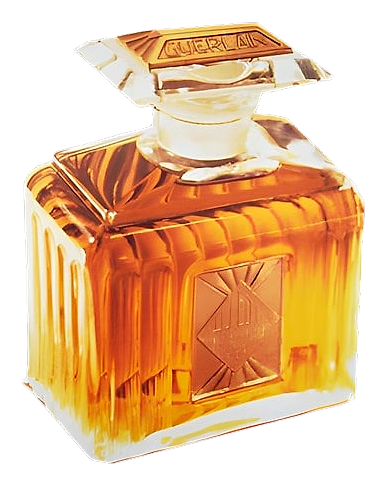
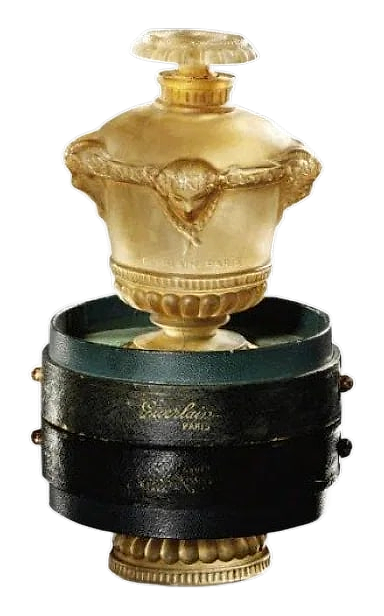
Bouquet de Faunes sits in an unusual space within Guerlain's catalog: a discontinued composition that the house has chosen to resurrect, at least partially, for those who visit the Champs-Élysées flagship. The original René Lalique flacon has been exhibited there since February 2014, and the extrait formula has been reconstructed for visitors to smell on request. This makes the fragrance less a commercial product and more a living artifact.