
The Story
Why it exists.
The beginning
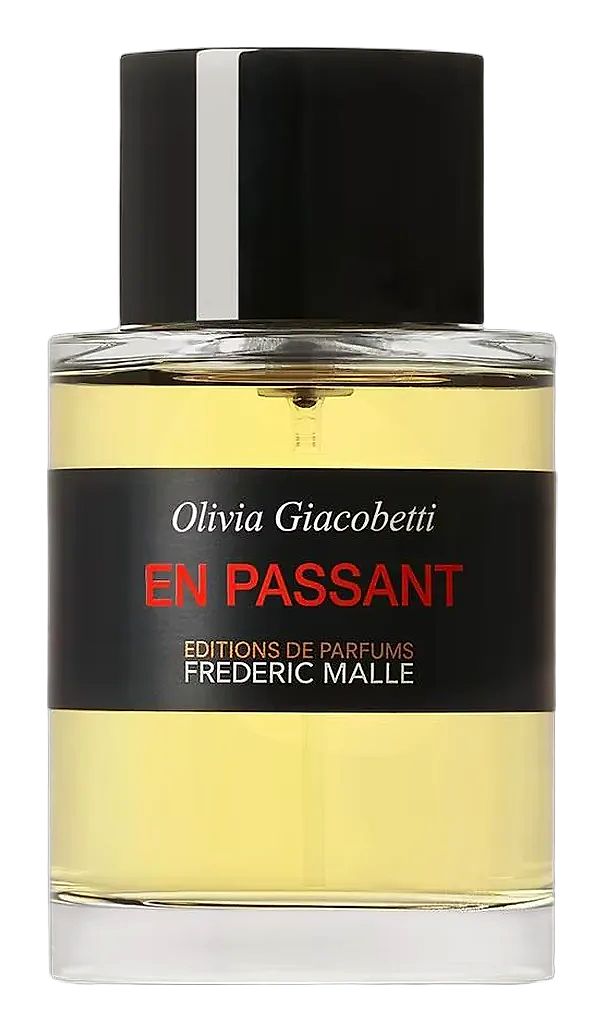
In 2000, Olivia Giacobetti made a bet with a flower that refuses to bet on itself. Lilac is beautiful, ubiquitous, and entirely absent from fine perfumery, because it has no natural essence. You cannot extract it. You cannot distill it. You can only try to catch it in the act of existing. Giacobetti captures lilac the way a photographer captures light: not the thing itself, but what it does to the air around it. She built En Passant around an olfactory impossibility and released it anyway, under the Editions de Parfums Frederic Malle imprint that gave her complete creative freedom to fail spectacularly or succeed unexpectedly. She chose the latter.
Giacobetti treats each note as a texture rather than a character. Marine notes do not smell exactly like the ocean here; they smell like the memory of cool air over water. Lilac does not smell exactly like lilac; it smells like the effect of lilac on spring air. This conceptual approach explains the unusual banana in the opening and honey in the heart: both serve to humanize the florals and prevent the Composition from reading purely abstract. The drydown uses musk as a bridge, literally connecting the floral heart to skin. Every note choice reflects the philosophy that a fragrance should feel like a moment caught in passing rather than an event constructed deliberately.
The evolution
The fragrance opens like a cool splash of cucumber water infused with marine air and green herbs. Galbanum and basil create immediate, vegetal freshness while calamus adds an intriguing, slightly medicinal depth. Orange and banana appear like fleeting tropical intrusions, softening the green sharpness before the florals arrive. At the heart, lilac materializes in gauzy waves intertwined with lily of the valley. Jasmine and petitg rain provide a quiet undertone of warm floral while honey and broom introduce a gentle, golden sweetness. Rose and carnation add nuanced floral depth. As the heart recedes, musk appears next to the skin, wrapping florals in intimacy while wheat and cedar introduce a clean, dry element. Sandalwood appears later, lending creamy softness, and amber and vanilla provide the faintest trace of warmth that persists gracefully into drydown.
Cultural impact
En Passant arrived with a single proposition: lilac, a flower the industry had deemed unworkable, could be done right. It was, and wearers noticed. The fragrance became shorthand for anyone who wanted to know what a modern, hyper-realistic lilac actually smells like, not a soliflore but an atmosphere. Where other houses approached lilac cautiously, Giacobetti made it the entire point. The ephemerality that critics call a flaw is actually the concept: En Passant smells like the moment you catch a scent on the wind and lose it again. That is the entire argument of the fragrance.