The Story
Why it exists.
The beginning
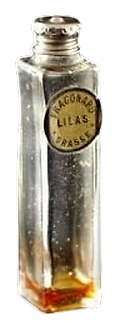
Aurélien Guichard was working with a flower that divides opinion. Lilac is one of perfumery's great unsolved problems, the natural essence doesn't capture what the nose expects, so houses either approximate it with synthetic molecules or build around it using materials that evoke its spirit rather than its literal presence. Guichard chose the latter path. For his 2024 addition to Fragonard's Fleur de L'Année collection, he placed lilac within a composition that frames its season rather than its scent. The result is a fragrance built around memory and atmosphere, the feeling of lilacs in a vase, the cool green stems, the way their scent behaves in a closed room. It's an interpretation of the flower's character, written in the language of a house that has spent nearly a century learning how to say things without screaming them.
What makes this composition unusual is the way it handles the transition from freshness to warmth. Most floral fragrances announce their heart notes early and let the base support. Lilas reverses the gesture, the top notes of linden blossom, lemon, and blackcurrant arrive with genuine coolness, almost astringent in their green clarity, then hold position long enough that you forget they're temporary. The heart notes (lilac, heliotrope, hawthorn, cloves) emerge gradually, their spice from cloves adding an unexpected depth that keeps the floral from becoming precious. The base, musk, violet, vanilla, doesn't arrive so much as settle, like fabric that has absorbed the warmth of a room.
The evolution
The opening is the longest phase, which surprises people who expect a quick transition to heart notes. Linden blossom and blackcurrant hold the foreground for the first 20 minutes, cool, almost dewy, with the tartness of blackcurrant cordiale. The lemon fades fastest, but its brightness echoes through the composition even after it's technically gone. Around the 20-minute mark, the cloves arrive. They're not announced, they insert themselves into the lilac and heliotrope, adding a warmth that wasn't present in the opening and that changes the fragrance's emotional register entirely. The shift is subtle but unmistakable: cooler becomes warmer, clearer becomes softer. This phase, the heart, lasts the longest, perhaps three to four hours, and it's where the fragrance earns its lily-of-the-valley-adjacent reputation. The hawthorn adds a certain whiteness, a clean-floral quality that keeps the clove from reading as spicy food. The base arrives quietly around hour three.
Cultural impact
Lilas joins a tradition of single-flower dedications that Fragonard has been building since at least the 2000s, releases like Héliotrope Gingembre and Juste un Baiser each take a single material as their conceptual anchor. The Fleur de L'Année collection, to which Lilas belongs, represents the house's annual commitment to a seasonal flower interpretation. In the broader landscape of 2024 releases, Lilas occupies a specific position: it's neither the green-fresh direction that other houses have taken with spring releases (see: the aquatic-adjacent and marine-forward releases from brands expanding into daytime wear) nor the maximalist approach that has characterized niche releases.