The Story
Why it exists.
The beginning
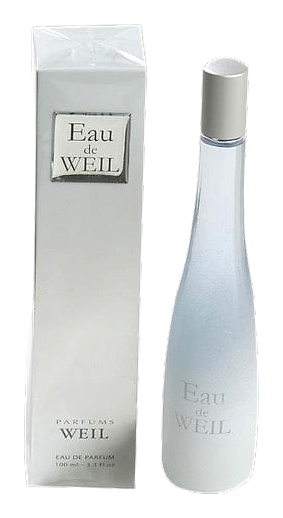
Eau de Weil arrived in 2008 from a house whose name carries its own quiet lineage. The Weil brothers built their reputation on fur long before they turned their hands to perfume, and that tactile sensibility has informed every bottle they've released since. By 2008, the scent catalogue had grown to include everything from the inaugural Zibeline in 1927 to the bamboo-driven Bambou era of the 1980s. Eau de Weil reads as a floral-citrus composition, soft and considered, built around mimosa, violet, jasmine, and rose with a clean base of white musk, vanilla, and amber. The citrus spark of bergamot and mandarin gives it lift, while pink pepper threads a whisper of warmth through the opening. The name says it plainly.
What makes the composition interesting is the restraint of its architecture. Mimosa and violet lead the heart, two of perfumery's quietest voices, flanked by jasmine and rose that behave more like texture than statement. The base brings white musk, vanilla, and amber together in soft proportions, a trio that warms the composition without weighing it down. There is nothing dense or heavy in the formula, no thick resins or heavy orientals pulling the scent downward.
The evolution
The opening belongs to bergamot and mandarin, citrus that arrives with a clean, immediate clarity, bright but never sharp. Pink pepper threads through the first moments, a flicker of warmth that keeps the composition from reading cold or sterile. Mimosa enters as the citrus begins to settle, and the composition turns inward, powdery and honeyed, carrying that particular softness mimosa gives to a blend. Violet adds its cool, cosmetic character, a smooth veil over everything beneath it, while jasmine and rose hover just behind, present but never stepping forward to dominate. The shift from heart to base happens almost without announcement. White musk and vanilla arrive together rather than in sequence, building a skin-close warmth that wears gently through the hours without ever projecting loudly.
Cultural impact
Eau de Weil arrived in 2008, adding another chapter to a fragrance house whose roots stretch back to 1927 and its inaugural Zibeline. The composition draws on mimosa, violet, jasmine, and rose in the heart, with bergamot, mandarin, and pink pepper opening the way, and white musk, vanilla, amber, and cedar anchoring the base. That note structure places it within a long French tradition of powdery, floral-led perfumery, the kind of soft, skin-close composition that has its own devoted audience.