
The Story
Why it exists.
The beginning
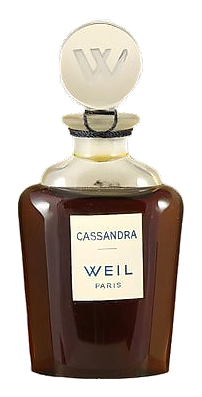
Cassandra arrived in 1935, composed by Jacqueline Fraysse for the house of Weil. The name carries Greek weight, Cassandra, blessed with prophecy, cursed never to be believed. Whether Fraysse intended the irony is lost. What survives is the fragrance itself: an aldehydic-floral Oriental that doesn't plead for attention. It arrives. It stays. The question is whether you're ready for something that old, that certain of itself.
What makes Cassandra notable is its layered structure. Most aldehydic florals of the era opened bright and resolved cleanly. Fraysse built in Hazelnut and Honey at the heart, an unexpected edible warmth that complicates the expected rose. Then the base: eight materials anchoring each other. Benzoin and Styrax resinous. Civet animalic. Oakmoss green beneath the powder. This isn't a fragrance with one idea. It's a conversation that keeps going after you think it's finished.
The evolution
The opening hits first, aldehyde sparkle cutting through like light on a cold surface. Bergamot lifts it. Lemon brightens. Geranium threads green underneath. The aldehydes don't vanish; they linger as a waxy undertone beneath the heart. Rose and jasmine arrive softened by honey. The Hazelnut is the surprise here, nutty, almost gourmand, making the floral heart unexpectedly edible. Lavender keeps it from getting too sweet. Myrrh and Patchouli add a bitter-green counterweight. The heart lasts longer than the top, which is unusual. Then the base unfolds slowly. Benzoin and Styrax release warmth like something heated. Musk and Civet arrive together, animalic but smooth, not harsh. Sandalwood and Vanilla create the powder. Oakmoss is the green beneath it all, a ghost of the forest floor. The drydown holds for hours. Close to the skin. Intimate sillage, not room-filling. You smell it the next morning.
Cultural impact
Cassandra arrived during an era when perfumery was building its foundational vocabulary, aldehyde florals, Orientals, the language of powder and warmth. It reflects that period without apology. This is not a fragrance designed for casual liking. It was made for someone who wanted a piece to wear, not to impress. Weil's niche positioning meant Cassandra never chased mass appeal. Those who found it, kept it.