The Story
Why it exists.
The beginning
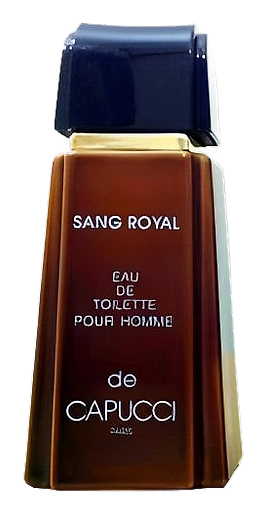
Sang Royal landed in 1967 from Roberto Capucci's fragrance line. The dry citrus-and-herbal opening reads almost academic, like the first page of a well-thumbed novel. There's a green austerity to those opening minutes, a controlled bitterness that suggests refinement rather than reachability. Then the base darkens. Leathery labdanum and an animalic warmth creep in, and the whole thing becomes something harder to categorize. The transition is slow and deliberate: what begins as a crisp fougère-leaning cologne loosens its collar somewhere past the midpoint and lets something wilder through. The labdanum arrives with the texture of worn leather, warm and slightly sweet, and underneath it the costus grounds everything with a rooty, almost dirty earthiness.
What makes Sang Royal unusual is the tension between its fougère architecture and its animalic undertow. The green, aromatic top and soapy, geranium-tinted heart read like a classic Italian gentleman's composition, almost barbershop in its cleanliness. Then costus and labdanum shift the register. Costus brings a dirty, root-like quality that grounds the whole thing in something earthy and slightly feral. Labdanum adds a leathery, almost resinous warmth that outlasts everything else.
The evolution
The opening belongs to dry citrus peel, bright and almost austere, the kind of introduction that makes you check whether you've accidentally grabbed the wrong bottle. It's herbal and green, with a soapy cleanliness that recalls traditional Italian barbershop fougères. In time, geranium takes over, adding a metallic floral edge that sharpens the composition into something more intellectual. The heart phase is where the aromatic core lives: a dense, almost architectural blend of aromatic greens and floral that sits close to the skin. Then the shift. Labdanum arrives with its leathery weight, and the animalic notes that were always underneath begin to surface. Costus adds a root-like, slightly dirty quality that grounds everything.
Cultural impact
Sang Royal has earned its reputation among collectors who appreciate the heavier, more animalic masculine fragrances of the mid-century Italian tradition. The scent's appeal lies in its refusal to behave like a polite barbershop fougère, choosing instead to introduce costus and labdanum at dosages that fundamentally change the character of the composition. For wearers, that translates into a cologne with presence, something that registers on others rather than fading into the background.