The Story
Why it exists.
The beginning
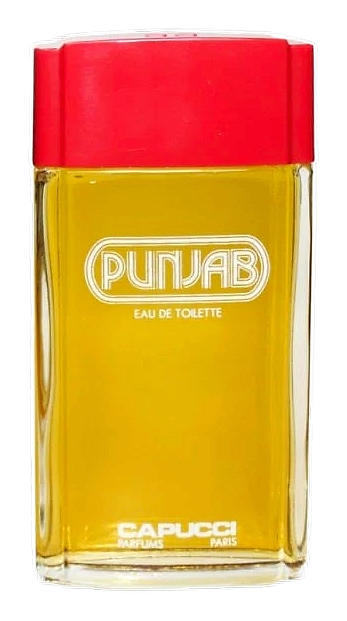
Punjab arrived in 1979 from Roberto Capucci, the Italian couturier. The composition itself is built around a dense, warm chord of spice, wood, leather, and smoke, layered into a single, unapologetic statement. The opening cuts green and cool, with juniper and bergamot sharpening the edges, lemon brightening what sits above, and artemisia dragging in something bitter and herbal, like crushed stems in a warm room. Marjoram rests underneath, soft and faintly sweet, giving the top a brisk, alert quality that reads clean without being cold. Around twenty minutes in, the whole thing pivots. Cedarwood and pine arrive together, and the temperature shifts. Patchouli grounds the base while carnation and cinnamon start building warmth in the middle.
What's unusual about Punjab is how conventional it feels at first glance. The brown accord of leather, amber, spices, woods, and smoke was everywhere in late-seventies masculine perfumery. The combination of pine and frankincense gives the composition a slightly ecclesiastical undertone, like the resin-heavy masculine flank of the era. Carnation and cinnamon push it warm rather than green, while the herbal top notes eventually give way to something denser. The result is recognizable but weighted differently, built to wear close to skin rather than announce itself.
The evolution
The opening reads green and cool. Juniper and bergamot cut sharp, lemon brightens the edges, and artemisia drags in something bitter and herbal, like crushed stems in a warm room. Marjoram sits underneath, soft and slightly sweet. It's brisk without being cold, the kind of opening that feels like stepping outside on an autumn evening. Clean and alert, almost conventional. Then the whole thing pivots. Cedarwood and pine arrive together, and the temperature shifts. Patchouli grounds the base while carnation and cinnamon start building warmth in the middle. Jasmine hides somewhere beneath, barely there, adding a faint sweetness that keeps the spices from going harsh. From there, the fragrance moves away from green entirely. It becomes a dense, warm composition centered on resin and leather.
Cultural impact
Punjab pulls from the warm, resinous masculine fragrance tradition, leaning into depth and projection rather than freshness. The frankincense and myrrh give it a smoky, devotional quality, setting it apart from lighter or greener masculine compositions of its period. The leather-and-spice accord anchors it firmly in the brown fragrance family, a category defined by its warmth and density. Collectors familiar with this tradition recognize it as a distinctive entry, one that holds its own against more widely circulated options from the same era.