The Story
Why it exists.
The beginning
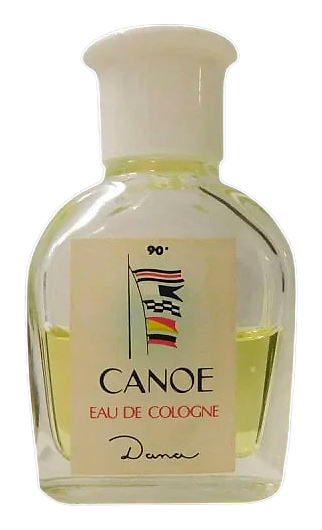
Jean Carles created Canoe in 1936 as Dana's answer to its own Tabu. Where Tabu was daring oriental sensuality, all amber, jasmine, and heat, Canoe would be something else entirely: bright, aromatic, and clean. Carles, known for his structured approach to fragrance composition, built this as a women's fragrance, a sister scent to the brand's blockbuster. It was a declaration that Dana could do freshness with the same conviction it brought to sensuality. The name itself suggested motion, openness, something carried rather than worn.
What makes Canoe interesting is its structure. The top is classic cologne, lavender and lemon doing the familiar work of refreshment, but the heart introduces Bourbon geranium and carnation, materials that add a quiet floral richness most barbershop fragrances skip entirely. Cedarwood and patchouli anchor that heart with wood and earth, preventing the whole thing from staying too lightweight. Then the base: heliotrope, tonka bean, vanilla. Powder and sweetness, close to the skin. This isn't a fragrance that announces. It's a fragrance that stays.
The evolution
Canoe opens with a barbershop sharpness, lavender dominant, lemon lifting the citrus, clary sage adding an herbal counterpoint that keeps things from getting too sweet. Within fifteen minutes, the carnation and geranium arrive, softening the edges with a quiet floral warmth that feels almost powdery. The cedar and patchouli emerge around the thirty-minute mark, adding weight and keeping the composition grounded. By hour two, the vanilla and heliotrope take over. The drydown is where Canoe becomes itself: warm, powdery, intimate. Oakmoss threads through the base, giving it that vintage character that reformulated fragrances struggle to replicate. On most skin, expect four to six hours of presence, moderate sillage, close to the body. The next morning, a faint trace of vanilla and powder lingers on fabric.
Cultural impact
Canoe arrived in 1936 as Dana's fresh counterpart to Tabu, and it stayed. American soldiers discovered it during World War II and brought it home, where it eventually shed its women's fragrance identity and became something else entirely: a masculine classic. It has outlasted countless trend-driven releases, surviving reformulations and shifting tastes. Today it occupies a specific niche, the wearer who values earned character over novelty, who understands that vintage doesn't mean old-fashioned.