
The Story
Why it exists.
The beginning
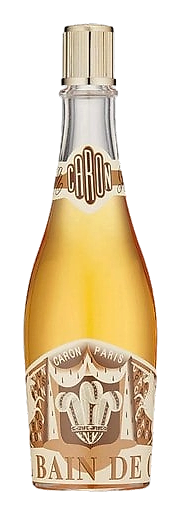
Bain de Champagne arrived in 1923, commissioned for someone who wanted fragrance as a statement of excess. The name says it all, bathing in champagne. Ernest Daltroff built it in Caron's signature style: bold contrasts forced into conversation. Lilac and rose against warm resins. Clean florals against balsamic depth. The collision was the point.
What makes this composition unusual is how the lilac and rose behave. They arrive cleanly, recede gracefully, never dominate. They exist to introduce, not to anchor. The real architecture lives in the benzoin and opoponax, a creamy-resinous partnership that gives the fragrance its character. Frankincense adds spiritual dimension without heaviness. This is an oriental that refuses to feel heavy.
The evolution
The opening is brief and precise: lilac and rose in quick succession, like someone arriving then immediately sitting down. Thirty minutes in, the florals thin and benzoin takes over, creamy, warm, the texture of thick honey without the sweetness. The opoponax and frankincense layer in gradually, adding resinous depth that keeps everything grounded. By the third hour, vanilla and amber carry the composition. Musk and sandalwood anchor the base while cedar provides unexpected structure. The drydown is intimate, close, the kind of warmth that lives against skin rather than filling a room. Six to eight hours on most skin types, with a quiet sillage that invites rather than demands.
Cultural impact
Bain de Champagne has survived nearly a century of fragrance trends by refusing to be one. It doesn't read as dated or retro, it simply reads as itself. The clean-soapy character appeals to those who want warmth without weight, luxury without announcement. Wearers describe it as the scent of someone who knows exactly what they want and doesn't need validation. It's not a fragrance that starts conversations. It's a fragrance that ends them, with authority.