The Story
Why it exists.
The beginning
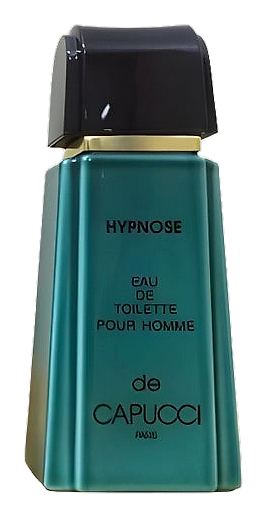
Hypnose arrived in 1967, a Roberto Capucci fragrance cut from the same cloth as the designer's couture work. Hypnose was the men's counterpart in that vision, a green-spicy composition that traded sweetness for something more composed. The 1960s were a busy decade for the fougère family, but Hypnose carried its own logic, built around herbal brightness and a base that refused to soften. It's a cologne with shape, the kind that announces its intentions before you've finished the first spray. Hypnose reads as green-spicy in profile, leaning on lavender and rosemary for the aromatic lift, then dropping into a mossy, woody base that keeps the whole thing standing upright. There's nothing tentative about it. You wear it or you don't, but it doesn't ask permission.
The fougère architecture is what gives Hypnose its skeleton. Fougère means fern, but in perfumery it means a specific tension: herbal brightness up top, lavender and rosemary doing their aromatic work, against a base that anchors everything in moss and wood. Hypnose leans into that structure without softening it. It's a composition that believes in its bones. The opening crackles with green energy, lavender cool against rosemary's sharper edge, and the whole thing reads as fresh-cut rather than freshly bottled.
The evolution
The first spray announces itself without apology. Lavender and rosemary hit first, green and almost bracing, the kind of opening that makes you check your wrist because you're not sure whether you just applied cologne or crushed a sprig of something between your fingers. There's a sharpness here that doesn't apologize for itself. The herbal brightness holds its ground in the early wear, the lavender cool and slightly camphorated, the rosemary threading through with something almost medicinal. Slowly the green starts to bend. A spicy thread begins to surface, warming the green into something more golden, less garden, more sun-warmed stone. The middle phase is where Hypnose settles into its stride. The lavender softens but never disappears, threading through a heart that feels drier, more composed, the kind of scent that smells like a man who already knows where he's going.
Cultural impact
Hypnose reads as a green-spicy fougère with real structure, the kind of composition that rewards a wearer who pays attention to what a cologne is actually doing. The 1967 launch placed it within the broader Italian design moment that treated scent as another creative medium, and the cologne has retained a quiet but steady following among collectors and enthusiasts who gravitate toward structured fougères. Surviving bottles appear in the secondary market with some regularity, drawn from a base of wearers who kept their bottles and now occasionally part with them.