
The Story
Why it exists.
The beginning
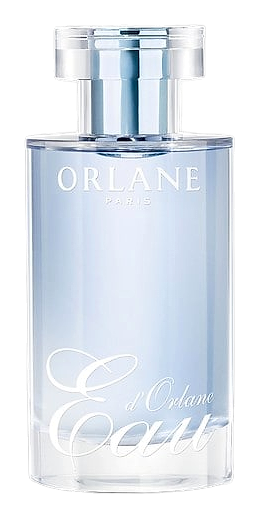
Eau d'Orlane arrived in 1992 from the Paris laboratory of Orlane. The fragrance was composed by Jean-Pierre Mary, a perfumer. In its era, Eau d'Orlane pointed in a particular direction: bright, transparent, built around citrus, aldehydes, and white florals. It was designed to feel clean and effortless rather than dramatic, a composition that trusts its materials to carry the moment. The citrus top notes, bergamot, lemon, mandarin, neroli, bitter orange, and verbena, hit the skin with the kind of clarity that recalls cold water poured over sun-warmed stone. The aldehydes lift everything, giving the opening a chypre-adjacent shimmer that feels both vintage and immediate. Beneath that brightness sits a heart of jasmine, lily of the valley, and rose, all rendered in soft focus.
The aldehyde treatment in Eau d'Orlane is what sets it apart. Aldehydes in this composition don't read as sharp or metallic. They produce a soapy, effervescent quality, the chemical cousin of sunlight catching glass. Combined with the layered citrus and green notes in the opening, the fragrance achieves a brightness that avoids the flat sweetness of single-note lemon colognes. The aldehydes and neroli together create a certain ozonic tension, a feeling of clean linen left to dry in open air.
The evolution
The opening is almost aggressive in its brightness. Aldehydes crackle at the surface while bergamot, lemon, mandarin, neroli, bitter orange, and verbena layer on top of each other like a citrus chord being struck all at once. There's an effervescent lift here that recalls sparkling water poured into a glass, the aldehydes providing the bubbles, the citrus providing the clarity. Then the composition softens. Green notes fade relatively early, and the neroli settles into something warmer, almost honeyed, a shift from sharp citrus to something rounder and more golden. As the top notes recede, the jasmine and lily of the valley find their footing. The rose stays faint, a suggestion rather than a statement, threading through the heart like a half-remembered tune. Orris root gives the heart a powdery calm that feels deliberate, like someone drawing the curtains halfway.
Cultural impact
Eau d'Orlane occupies a distinctive position within classical French perfumery. It belongs to a tradition of compositions that trust citrus and aldehydes to do the structural work, a lineage that stretches back through the great hesperides of the early twentieth century. The fragrance offers a particular kind of brightness, one that feels architectural rather than accidental, where every note serves the composition's overall clarity. For those who appreciate transparency in fragrance, where the materials are legible and the construction is honest, Eau d'Orlane serves as a reference point.