

The Story
Why it exists.
The beginning
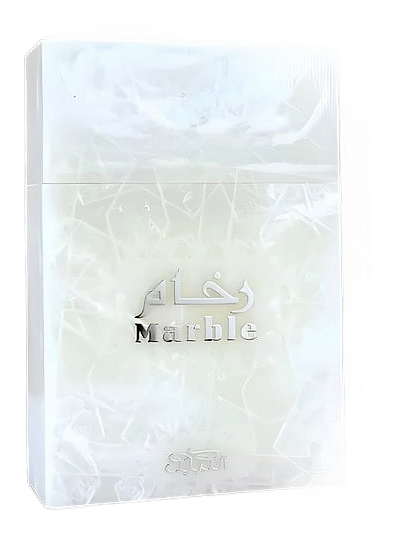
Marble comes from Nabeel, a house whose listed perfumemaker is Asghar Adam Ali. The brand has built a catalogue around oud, amber and rose, treating them as a kind of shared vocabulary. Marble, released in 2018, is one of the newer compositions in that line, part of the Elite Collection, and it pulls in a direction the older oil-based classics rarely visit: bright fruit, sharp citrus, a fresh-spicy opening layered over traditional Gulf architecture. The intent reads as accessibility without compromise, the house's depth worn through a modern, slightly louder lens. Asghar Adam Ali is credited as the perfumemaker, and the composition itself takes the familiar Nabeel framework and turns it toward something sunnier and more immediate.
What's unusual here is the stacking. Marble inverts the usual order. Rose and apple hit first, sharpened by bergamot, lemon, blackcurrant and pineapple. The fruit-and-citrus front isn't decorative either; it sets the altitude before the heavier materials arrive. When oud, patchouli, birch and juniper finally land in the heart, they land into a surface that's already warm. The contrast is the composition. A traditional Gulf base, dressed in a brighter, more contemporary opening, and the way the two halves meet is what gives Marble its particular character.
The evolution
The first ten minutes are almost disorienting: pineapple and bergamot, a rose-tinged sweetness, citrus bright enough to read as cologne-adjacent before the wood has even thought about showing up. Then the temperature drops. Oud and patchouli rise through the fruit like stone breaking the surface of water. Birch adds a dry, slightly smoky edge, juniper brings a cool green bite, and the whole middle phase settles into something darker and denser than the opening promised. Leather surfaces later in the wear, warm and a little worn, and it doesn't arrive with fanfare so much as simply appear once the fruits have stepped back. The drydown belongs to amber, vanilla and moss, with that tree-moss sweetness leaning powdery against the leather rather than competing with it.
Cultural impact
Marble sits in a specific lane for Nabeel: a 2018 release that brings the house's traditional Gulf depth into a brighter, more contemporary shape without abandoning it. The fruity-spicy-woody profile has drawn wearer comparisons to compositions like Acqua di Parma's Oud, surfacing in community discussion of similar fragrances, though Marble doesn't read as a direct imitation of that reference. The opening of pineapple and bergamot makes it one of the more approachable entries in the catalogue, while the heart and base still deliver the weight that wearers associate with the brand.
The House
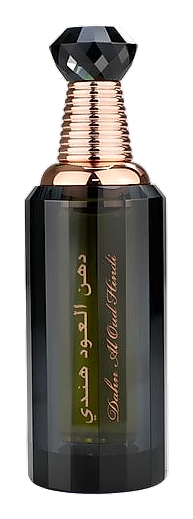
NabeelNabeel is an Emirati fragrance house that traces its roots to 1969, when Asghar Adam Ali (Al Attar) launched the label in Yemen before relocating operations to the United Arab Emirates. Over more than five decades the brand has built a catalogue that includes oil‑based classics such as Ashjan, Irth Gold and Shahrezad (2016), as well as newer releases like Dahn Al Oud Hindi (2018). Nabeel’s offerings balance traditional Arabic accords—oud, amber, rose—with modern compositional twists, catering to collectors who value depth and longevity in perfume oil and spray formats.
The Creator
Asghar Adam AliAsghar favors a layered architecture that begins with a bright, citrus or spice top, settles into a heart of floral or resin, and rests on a deep, woody base. He frequently employs raw oud, ambergris, and musk, pairing them with rare spices such as cardamom and nutmeg.