The Story
Why it exists.
The beginning
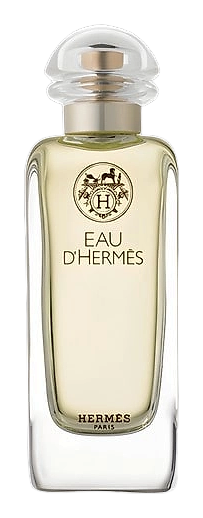
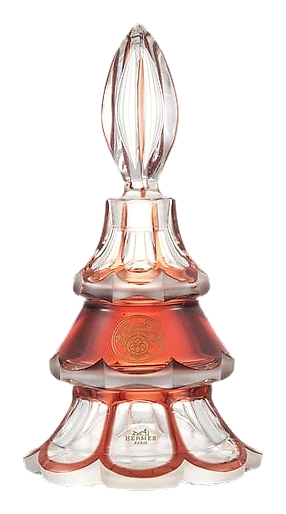
In 1990, Hermès produced a special edition of L'Eau d'Hermès, the composition by Edmond Roudnitska that inaugurated the house's fragrance métier. The scent was reissued in 400 crystal flacons crafted by Cristalleries de Saint-Louis to commemorate the coronation of Emperor Akihito of Japan. The scent itself was not new. The vessel was everything. Each bottle carried Roudnitska's original architecture of lavender, spice, and leather, dressed now in a flacon that elevated the offering to ceremonial weight. The crystal, cut and shaped by Saint-Louis, gave the juice a frame worthy of the occasion, transforming a personal fragrance into a commemorative object meant to mark a specific historical moment. Production was apparently discontinued, and the 400 pieces that survived became artifacts.
What makes this bottle significant is the contrast it stages. Roudnitska's composition was already a study in composed aromatics, lavender and bergamot over a structured leather-cedar base, but the Saint-Louis vessel placed it in a different register. The flacon's weight, the cut of the crystal, the ceremonial implication of the occasion, all of it pushed the scent into the territory of occasion piece rather than daily habit. That said, the composition resists formality. The cumin and cardamom in the heart run warm and almost bodily, pulling the perfume toward intimacy.
The evolution
The first 15 minutes read almost like a cologne revival: lavender, bergamot, petitgrain, a clean herbal brightness that wouldn't feel out of place in a barbershop. The opening has that particular French clarity, an almost transparent quality where each component is allowed its own space. Then the spice arrives. Cumin, coriander, cardamom, and cinnamon start building a dense aromatic heat that has no business being this warm. The transition from the cool, soapy top to the heated heart is one of the more dramatic in mid-century French perfumery, and it happens within the first half hour. The jasmine and geranium sit underneath, but barely, because the spice dominates the heart for an extended stretch. The rose note, if present, is buried so deeply within the floral-spice matrix that it reads as texture rather than as a distinct element.
Cultural impact
This is not a fragrance that shifted a category or launched a trend. It is a commemorative artifact, 400 crystal bottles produced for a single ceremonial purpose. The 1990 edition sits within Hermès's tradition of treating fragrance as an object of craft, something to commission, to gift, to collect, rather than simply to sell. The Saint-Louis flacon, heavy with cut crystal and ceremonial implication, places the edition outside the normal flow of commercial perfumery. The occasion that produced it, the coronation of Emperor Akihito, gives the object a historical anchor that market reception alone could not provide.
The House
HermèsHermès fragrances are the olfactory equivalent of a perfectly crafted leather bag or a fine silk scarf. They're not about loud statements but about quiet confidence, telling stories inspired by nature, poetry, and the house's equestrian heritage. This is perfumery as an art form, defined by intellectual elegance and exceptional materials.
The Creator
Edmond RoudnitskaRoudnitska's great gift was solving problems nature presented but refused to solve herself. The lily-of-the-valley cannot be extracted; he built Diorissimo from scratch using hydroxycitronellal and allied chemicals, achieving something so convincing that generations of perfume…