The Story
Why it exists.
The beginning
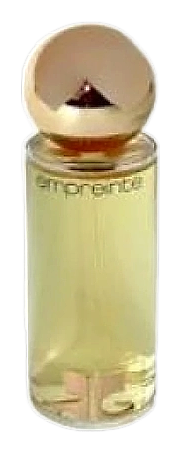
Courrèges launched in 1961 as a house obsessed with the future. By 1970, it was ready to translate its clean-lined, kinetic aesthetic into fragrance. The house chose Robert Gonnon to create that olfactory translation, a perfumer who understood that movement and purity in fashion could become movement in scent. Gonnon reached for artemisia and coriander as structural elements, using aldehydes to lift the composition the way Courrèges used synthetic fabrics to free the body from weight.
Gonnon's approach mirrored the house philosophy: structure through restraint. Artemisia provided the green backbone, castoreum the animal warmth, iris the powdery elegance. Together they translated Courrèges's architectural precision into a fragrance that moved with the wearer rather than announcing itself. Pairing this scent means leaning into its clean period aesthetic: structured shirts, minimal jewelry, a return to graphic simplicity.
The evolution
The opening begins with artemisia and coriander creating a green, almost bitter curtain that signals intention. Aldehydes arrive like a flash of light, brightening bergamot and peach into a crystalline top notes. As the first hour passes, iris emerges as the structural heart, its powdery root quality supported by jasmine and rose. Melon introduces a watery, clean quality that keeps the floral heart from feeling heavy. Three hours in, oakmoss and castoreum take hold, their mossy, animalic character shifting the composition toward earth. Cedarwood and sandalwood arrive to smooth the transition, while patchouli and amber warm the base into a lingering, intimate drydown that can persist for six hours or more on skin.
Cultural impact
When Empreinte debuted in 1970, it arrived at a moment when fashion houses were beginning to assert their identities through scent, positioning Courrèges as a pioneer of modernist fragrance design. Its green‑herb and aldehydic opening echoed the brand’s architectural lines, influencing subsequent designers to integrate crisp, botanical notes into masculine‑leaning chypres. Over the decades, the perfume has been cited in retrospectives as a benchmark for balancing avant‑garde aesthetics with wearable elegance, inspiring a generation of perfumers to explore the interplay between synthetic aldehydes and natural herbs.