
The Story
Why it exists.
The beginning
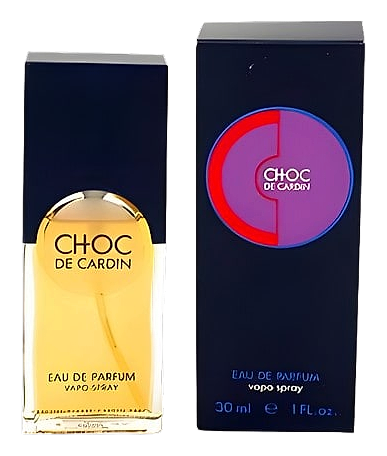
Pierre Cardin's house built its fragrance identity on geometry, structure, and forward momentum. "Choc de Cardin", the name itself is a collision, arrived in 1981, designed by Françoise Caron to capture that Cardin tension: cool aldehydes and warm civet, sharp green notes and soft honeyed florals, the modernist's boldness tempered by classical chypre tradition. Caron structured the composition like architecture: load-bearing accords, clear sight lines, nothing decorative that doesn't earn its place. The 1981 launch placed it squarely in the golden age of chypre construction, when houses still built fragrances meant to last and be remembered. Choc, impact, collision, the moment two forces meet. That's the idea. Not a gentle florally introduction to the brand, but a statement piece. A fragrance with actual opinions about what it wants to be.
The notes pyramid here is textbook 1981 chypre, and textbook Cardin. Aldehydes, bergamot, basil, peach in the top. Rose, jasmine, orris, honey, lily of the valley in the heart. Oakmoss, civet, sandalwood, patchouli, amber, musk in the base. That's a full pyramid, yes, but what makes it worth discussing is the internal logic. Françoise Caron didn't just stack notes, she built a structure. The aldehydes and green basil create an opening that's almost architectural: sharp, geometric, cool. The honey doesn't sweeten the florals so much as ground them, giving the rose and jasmine something to sit against rather than float through.
The evolution
The aldehydes hit first, bright, sparkling, almost metallic in the way they catch light. Bergamot follows, cool and citrusy. Then the basil arrives, green and aromatic, preventing the opening from going too bright or too sweet. That basil is the bridge: it keeps the aldehydes from feeling retro just because they're aldehydes. Twenty minutes in, the florals announce themselves. Rose and jasmine emerge through honey, sweetness that doesn't climb, that sits low and warm against the skin. The lily of the valley adds a powdery, slightly green undertone. The orris root gives the heart its backbone. This is where the fragrance earns its structure: the florals don't overwhelm, they deepen. The civet becomes apparent as the florals settle. Not skanky, just warm. Present. Honest about what it is. On most skin, this phase lasts 2-3 hours: the honey and florals slowly yielding to the base. Then the oakmoss takes over. The drydown is mossy, earthy, with sandalwood warmth underneath and patchouli's quiet depth. The civet softens but doesn't disappear, it lingers in the warmth.
Cultural impact
Discontinued, but never forgotten by those who found it. Choc de Cardin occupies a specific corner of chypre history: aldehydic and green, with enough civet warmth to distinguish it from safer compositions. It has quietly become a collector's piece, not for the investment value, but for the smell itself. The combination of aldehydes, basil, and civet is specific enough to feel unique and classical enough to feel earned. Pierre Cardin brought geometric confidence to fashion; Françoise Caron brought that same confidence to this 1981 composition. It's architecture you can smell.