
The Story
Why it exists.
The beginning
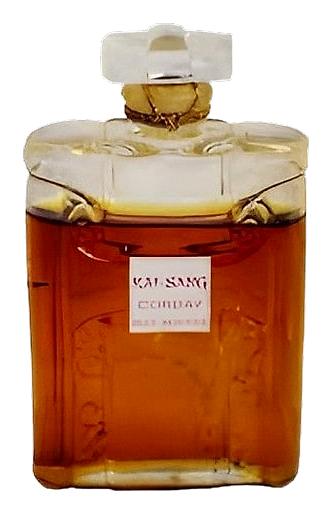
Kai-Sang arrived in 1924, released under the Corday house in Paris, with Blanche Arvoy credited as its perfumer. The label took its name from Charlotte Corday. Kai-Sang marked a turn eastward, a French composition whose bottle carried a distinctly Far Eastern silhouette: the polylobe inkwell form, rendered in black opaque glass and designed by Maurice Depinoix. That unusual vessel shaped how the perfume was received before a single note reached the nose. A bottle that looked this specific demanded a scent that could hold its ground. In an era when most French releases leaned on conventional Parisian geometry, Corday chose a container that gestured somewhere else entirely.
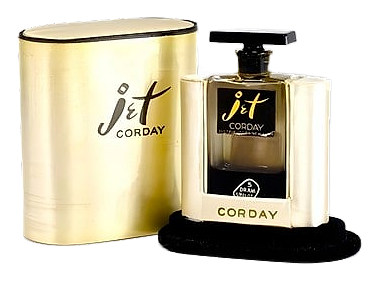
What's worth noting is how early this was. 1924 was a year of momentum for Corday, the same season that produced Toujours Moi and Jet. Yet Kai-Sang took a noticeably different path from those launches. The scent itself resists easy summary: a woody, smoky, floral oriental that builds slowly rather than announcing itself. Where contemporaries chased instant appeal, Kai-Sang asked for patience. The smoke arrives almost immediately, dry and deliberate, and the florals surface only after the composition has earned the right to show them.
The evolution
The first fifteen minutes feel almost meditative. Smoke and something dark and resinous arrive before any sweetness, a dry, woody opening that reads more like incense than cologne. Around the thirty-minute mark, the florals surface, soft and slightly powdery, never competing with the smoke, just threading through it like steam through a window. The floral phase is restrained, a hush rather than a declaration, and it gives the woody backbone room to stay present underneath. By the two-hour mark the composition has settled into its true self: warm, slightly balsamic, close to the skin. The woody base holds longest, anchoring everything that came before. On fabric the next morning, it reads as a faint trail of something burned sweetly, more suggestion than statement, a quiet echo of cedar warmth and a trace of floral that refuses to fully announce itself.
Cultural impact
Kai-Sang sits in a small category of oriental perfumes released in 1924, the same year Corday launched Toujours Moi and Jet. It arrived as a quieter object among its launch siblings, offering a woody, smoky, floral composition that moved at a different pace from the decade's brighter releases. Today it appears in vintage collections as a quiet artifact, the kind of bottle a collector pulls out to show what early interwar perfumery could look like when a house chose a container and a scent that pointed somewhere beyond convention.
The House
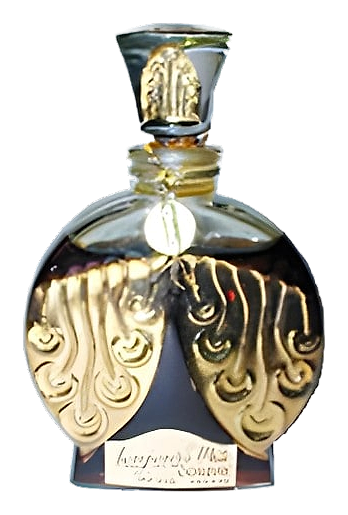
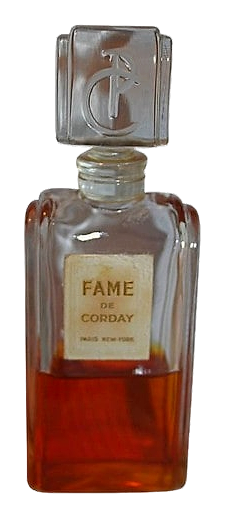
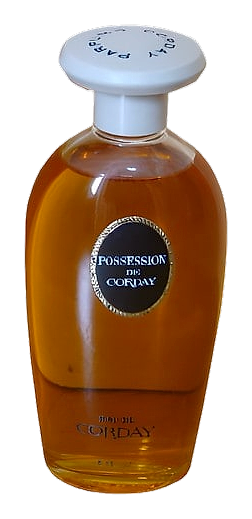
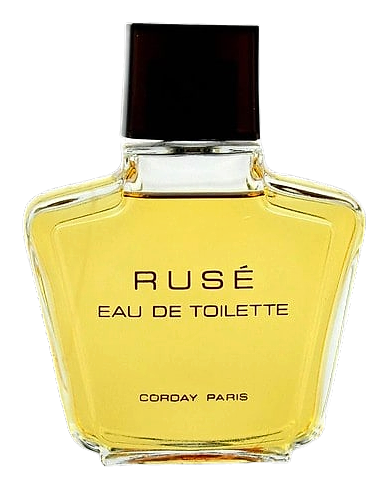
CordayCorday is a Paris‑born perfume house that emerged in the roaring twenties and kept a quiet presence through the mid‑century golden age of French fragrance. Founded by the entrepreneurial Blanche Arvoy, the label introduced a string of scents that still appear in vintage collections and specialty boutiques. Corday’s portfolio reads like a timeline of interwar and post‑war taste, from the bright citrus of Toujours Moi (1924) to the warm amber of Rusé (1966). The brand’s understated elegance and commitment to classic French perfumery make it a subtle point of reference for collectors who value history as much as aroma.
The Creator
Blanche ArvoyArvoy worked in a bold, theatrical register shaped by her background in design and the performing arts. She favored strong florals, rich animalic notes, and deep oriental bases that projected across a crowded salon.