
The Story
Why it exists.
The beginning
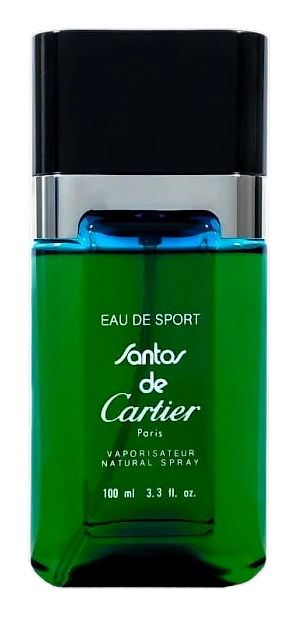
Cartier launched Santos Eau de Sport in 1989, a release that arrived with quiet conviction rather than spectacle. The fragrance was stripped for movement, tuned for clarity rather than decoration. The fougère structure was nothing new in itself, but Cartier's choice to keep it angular, herbal, and surprisingly dry for the era set the composition apart. No tropical fruit, no aquatic fantasy. Just rosemary, tarragon, and coriander opening the door, with a woody-spicy interior that respected the wearer's intelligence. The opening trio reads like a Mediterranean garden after rain, green and peppery with a faint licorice curl from the tarragon. The coriander adds a savory warmth that keeps the herbs from feeling austere, pulling them toward something almost edible before the spices settle in.
What makes the composition distinctive is the tension between its aromatic herbs and its resinous base. Santos Eau de Sport refuses easy categorization. The caraway and coriander give the heart a slightly savory edge, almost culinary, while the styrax, labdanum, and benzoin in the base anchor it with the kind of warmth you find in old churches and leather-bound libraries. The patchouli is present but never hippie. The oakmoss grounds everything without dragging it into the 1970s. The interplay between top and base creates a dialogue that rewards attention.
The evolution
The opening is loud and awake. Coriander, tarragon, and rosemary arrive almost simultaneously, with bergamot and lemon threading through them like daylight through blinds. It's sharp, green, and slightly peppery, the olfactory equivalent of stepping outside into cool air after a hot shower. The citrus burns off relatively quickly, and the fir needles and orange blossom start to register, giving the composition a clean, almost cologne-like clarity. Caraway surfaces here, and it's what separates this from the average fougère: a quiet, anise-edged warmth that makes the whole thing feel considered. The transition into the heart is gradual rather than abrupt, with the herbs slowly losing their bright edges as cedar, sandalwood, and vetiver settle in alongside jasmine and carnation. The fragrance relaxes into its body, shedding its initial sharpness for something rounder and more grounded.
Cultural impact
Santos Eau de Sport entered the fragrance market in 1989, an aromatic fougère from Cartier bearing the Santos name and carrying the maison's signature restraint into a category often defined by louder gestures. The fragrance's coriander, tarragon, and rosemary top, layered over tonka and oakmoss, marked a clear approach to masculine sport fragrance that prioritized herbal clarity over synthetic aquatic effects or heavy oriental warmth. Its composition reads as a textbook study of the aromatic fougère tradition executed at a luxury house level, where every note is placed with intention.