
The Story
Why it exists.
The beginning
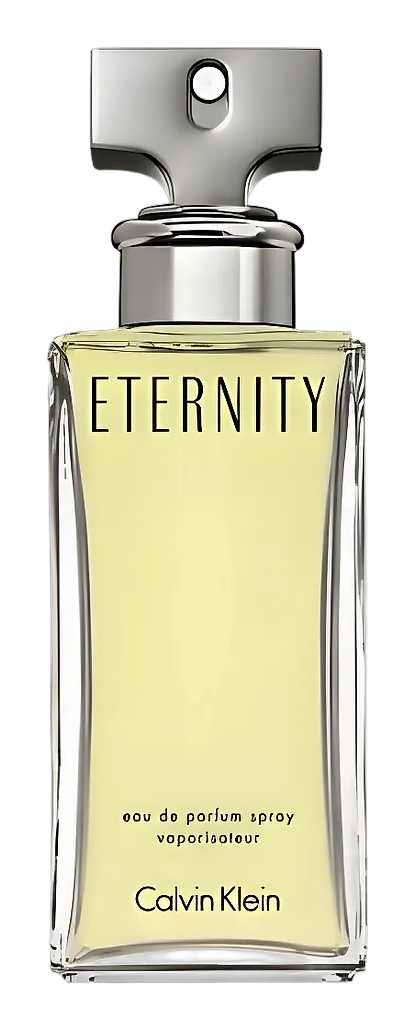
Eternity arrived in 1988, which tells you everything about its intentions. Perfumer Sophia Grojsman brought the same logic to scent. No complication. No mystery. Just the honest beauty of flowers, green things, and a base that doesn't disappear after an hour. The fragrance distills a vision of simplicity into something that lingers, that holds its shape through the heat of a long day and into the quiet hours of evening. It's the kind of perfume that doesn't announce itself but finds you anyway, settling close to the skin like a secret kept well.
What makes the structure interesting is what it doesn't do. Seven florals in the heart, carnation, lily of the valley, jasmine, rose, violet, narcissus, white lily, could have become overwhelming. Instead, Grojsman let them share the stage with green notes at the top and a quiet base of musk, amber, and heliotrope. The result is a fragrance that announces itself clearly, then stays. Not because it's loud. Because it's true.
The evolution
The opening is green and clean, freesia, mandarin, sage. Then the florals arrive and they don't ask permission. Lily of the valley, jasmine, rose, carnation: the heart is lush, warm, and unmistakably feminine. The florals hold their ground through the mid-section, never quite fading, before the base notes begin to assert themselves. Amber and heliotrope warm things up. Musk and sandalwood settle close to the skin. Patchouli adds just enough earth to keep it from floating away entirely. By the drydown, it's skin-warm and powdery, the kind of smell that stays intimate and close. The next morning, there's a trace of warmth where the fragrance lived, a soft reminder that lingers in the places where you applied it.
Cultural impact
Eternity has been in continuous production since 1988, a classic that has maintained its presence on counters and in collections for decades. Clean florals, done well, lasting all day. The fragrance projects a certain confidence in its simplicity, a refusal to complicate what works. It doesn't demand attention but holds it once given, the kind of scent that becomes familiar and then essential.