The Story
Why it exists.
The beginning
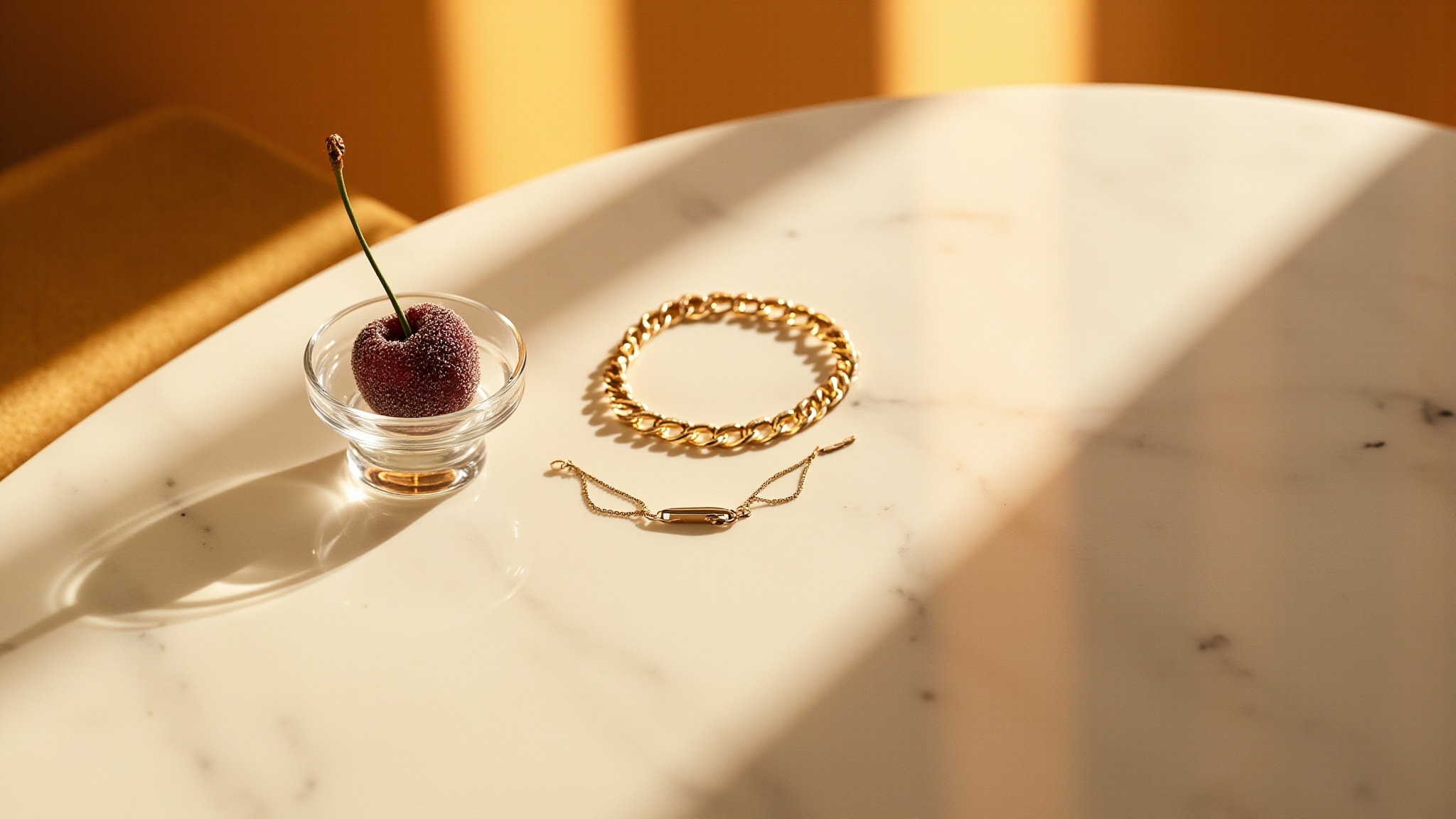
Christine Nagel launched Delices in 2006 with a clear mandate: take something universally loved and make it Cartier. The brief was cherry, bright, juicy, accessible cherry, but filtered through the Maison's lens of discretion and refinement. Where most cherry fragrances lean into candy or medicine, Nagel reached for bergamot and pink pepper to keep the top bright without going sharp. The floral heart does the quiet work of softening everything into something that could live next to a diamond cuff and not look out of place. This is cherry as invisible jewellery, sweet, but worn close.
What makes Delices interesting is its structure: a cool, frosty opening that gives way to a warm, powdery close. That contrast is harder to execute than it sounds. Pink pepper and bergamot create the chill; tonka bean, vanilla, and sandalwood deliver the warmth. The jasmine-violet-freesia heart bridges both worlds without favoring either. It's the compositional equivalent of a cashmere coat worn open, deliberate, composed, but with something inviting underneath. Nagel understood that Cartier's audience wants sweetness without cuteness, and she delivered it with restraint.
The evolution
First hour: frosted cherry, pink pepper, bergamot. Tart and bright, like the first bite of a cherry before the sweetness registers. The bergamot keeps it cool; the pink pepper keeps it interesting. Second hour: the florals arrive. Jasmine, violet, freesia, not loud, just present. The cherry doesn't disappear but it softens, becomes part of the background warmth. Hours three through six: tonka, vanilla, amber, sandalwood. The drydown is where this fragrance earns its Cartier name. Powdery-warm, close to the skin, the kind of smell that makes someone lean in rather than step back. Lasts six to eight hours on most. The cherry ghost reappears the next morning, faint and intimate.
Cultural impact
Delices arrived in 2006 as Cartier's answer to the cherry-forward trend, but with the restraint the Maison demands. Christine Nagel's composition predates the modern cherry renaissance by a decade, offering a template for how to make fruit accessible without making it cheap. The fragrance has since become a quiet cult favourite among those who remember it, the kind of scent people ask about when they catch a whiff of something familiar but elevated.