The Story
Why it exists.
The beginning
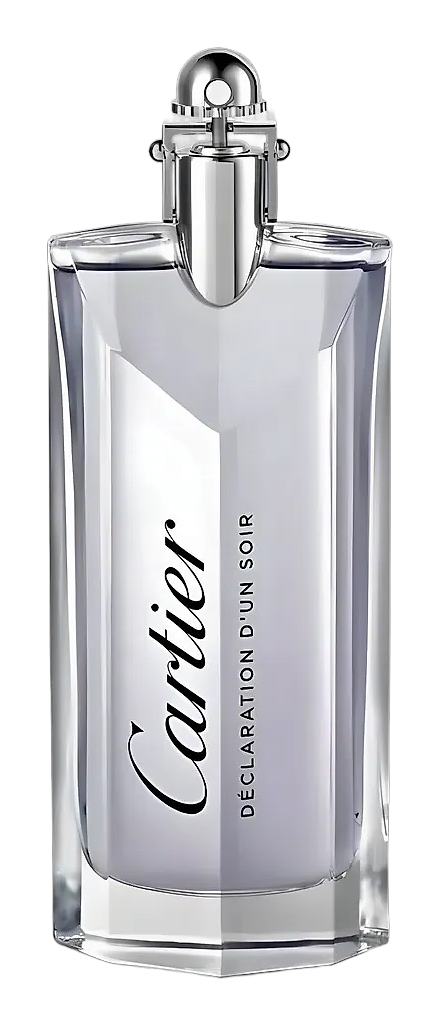
Cartier has translated the language of precious gems into wearable form since 1847. Every fragrance is conceived as invisible jewellery, an intimate ornament that speaks to the same desire for beauty and craftsmanship that has drawn royalty and connoisseurs for over a century. Declaration d'un Soir arrived in 2012 as a flanker to Cartier's original Declaration, composed by in-house perfumer Mathilde Laurent. The original was a cold-spice statement from Jean-Claude Ellena, angular, restrained, something you'd wear to a meeting where you needed the upper hand. Laurent was given the task of writing a companion piece, something that shared the lineage but diverged in tone. She chose to soften the architecture, adding warmth through cardamom and rose, yet preserved the sharp edge that defines the Declaration family identity.
Cardamom and black pepper are not typical opening choices for an EDT positioned as an evening fragrance; they suggest intention rather than accident. Laurent seems to have chosen them specifically to counterbalance the rose heart, ensuring the floral element never becomes precious or delicate. Cumin, often associated with body and warmth, reinforces the fragrance's grounding quality. Sandalwood as the base note serves a dual purpose: it provides longevity and comfort while keeping the overall character firmly in the warm, aromatic category rather than allowing it to drift toward sweetness.
The evolution
The fragrance opens with cardamom, black pepper, and cumin, a triple spice assault that feels deliberate and controlled. These are not delicate aromatics; they carry weight, they assert presence. Over the first fifteen minutes, the cumin settles, the pepper dulls to a warm tingle, and rose begins to surface in the heart alongside nutmeg. The rose does not bloom into something lush or romantic; it arrives quietly, lending a faint floral counterpoint to the spice. Nutmeg adds depth without sweetness. By the time sandalwood arrives in the drydown, the composition has softened considerably. The woody base wraps the earlier notes in creaminess, creating a finish that feels intimate rather than loud. The journey moves from heat to floral subtlety to creamy wood, each phase distinct but connected by an overarching restraint.
Cultural impact
Declaration d'Un Soir arrived in 2012 as Cartier's response to the growing demand for masculine fragrances that blurred gender lines. The rose-heavy composition challenged prevailing notions about what masculine perfume should smell like at a time when the industry was beginning to shift toward more inclusive fragrance profiles. Mathilde Laurent's decision to center rose alongside sandalwood rather than the traditional masculine wood-and-spice base positioned the fragrance as a bridge between masculine and feminine olfactive territories, predating the wave of gender-neutral fragrances that would dominate the late 2010s and early 2020s.