
The Story
Why it exists.
The beginning
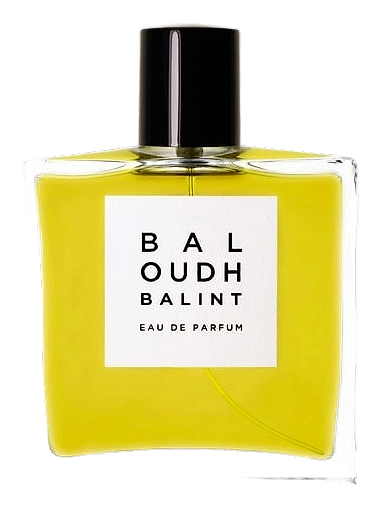
Baloudh arrived in 2020, a composition that swings hard toward smoke, resin, and weight rather than the floral-green territory the house had explored before. Csaba Bálint built the structure around oud as the gravitational center, then wrapped it in raw materials that speak to a particular kind of patience and selectivity. The intent reads less like a commercial oud launch and more like a private thesis on what happens when Eastern and European raw materials are placed in direct conversation with each other. There's no posturing here, no attempt to please the existing oud market. Instead, Bálint treats the genre as a meeting point between distinct craft traditions, each with its own grammar, and lets the materials argue it out on skin.
Baloudh leads with a fruit-smoke collision that catches most wearers off guard. Blackberry, blueberry, and cherry hit the nose almost immediately, jammy and dark, stacked against birch tar and frankincense in a way that refuses to behave like a typical oud composition. The birch tar does a lot of quiet work here, lending that campfire-leather bitterness that anchors the dark sweetness without overwhelming it. Bulgarian rose and tuberose sit in the heart, but their presence is almost defensive, like flowers growing stubbornly at the edge of a burn zone.
The evolution
The first ten minutes taste almost like dessert, blackberry and cherry glazed with bergamot brightness, a little syrupy, a little reckless. Then the resins wake up. Birch tar darkens the fruit, cypress absolute cuts in with a green-woody chill, and the oud arrives as more smoke than barnyard. Around the thirty-minute mark the composition gets serious: iris powder, rose absolute, and tuberose try to soften the blow, but the leather and labdanum underneath keep pulling it back toward something heavier. By hour two you're wearing mostly incense, leather, and that dry woody-amber base, the fruit now a ghost memory hanging in the upper register. The drydown settles into hay, vanilla, and patchouli, warm and almost meditative, with musk holding it close to skin.
Cultural impact
Baloudh has carved out a specific lane within the niche oud conversation, one that refuses to mimic the genre's usual reference points. The fruit-smoke structure makes it less intimidating than traditional Arabic-leaning oud compositions while still demanding full attention from anyone who wears it. Collectors who have already cycled through the usual oud houses tend to land here precisely because the composition doesn't traffic in familiar moves. There's a weight to it that earns its place in a serious rotation, and the material choices signal a perfumer who treats oud as one ingredient among many rather than the whole point.