The Story
Why it exists.
The beginning
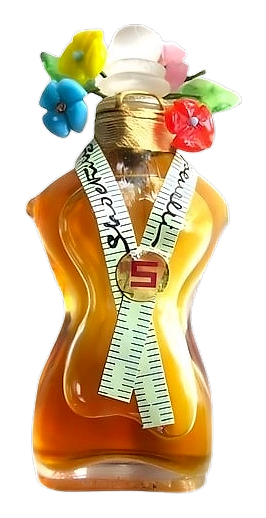
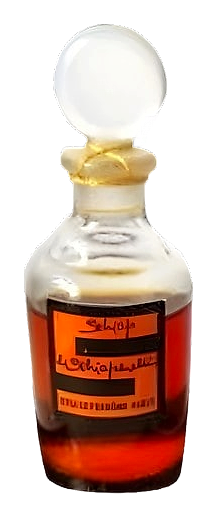
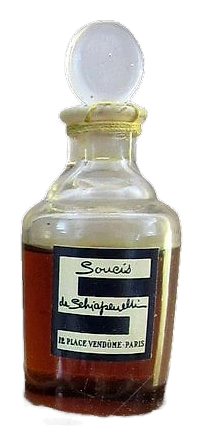
Soucis landed in 1934 as part of Elsa Schiaparelli's first perfume trio, alongside Salut and Schiap. The name carries a wink. In French, 'soucis' means 'worries,' and the house of Schiaparelli never missed a chance at wordplay. This was a house that dressed women in collaboration with Dalí, that turned fashion into a Surrealist game. By 1934 Elsa had cemented her friendship with Jean Cocteau, and her fragrances followed the same logic as her couture: witty, theatrical, designed for a woman who knew exactly what she was doing. Chanel was the biggest competitor of the time, a rivalry that sharpened the house's appetite for provocation. Soucis was built for cocktail hour, the late-afternoon moment when perfume is a social instrument rather than a finishing touch.
The composition rests on a structure that rewards close attention. Honey sits at the heart, not as a sweet afterthought but as a load-bearing element, its warmth catching the carnation and rose before they drift too polite. Heliotrope adds the almond-powder haze that defined 1930s French feminine perfumery. What sets Soucis apart is the base: civet, the note that gives the composition its pulse and tells the wearer this is not a scent playing by the usual rules. The oakmoss and leather underneath give it weight without dragging it into masculine territory.
The evolution
The opening belongs to bergamot and neroli, bright and almost innocent, like the first sentence of a letter that hasn't yet revealed its purpose. Tarragon adds an herbal coolness underneath, the kind of green that suggests a garden at dusk before the flowers have fully opened. The florals arrive in due course: jasmine, gardenia, rose, ylang-ylang, a full bouquet that should overwhelm but doesn't, because the honey is already pulling everything toward the center. Heliotrope powder starts settling in as the composition moves through its progression, and the whole arrangement softens, takes on a diffused warmth. Eventually the civet wakes up. It doesn't dominate, it infiltrates, adding a musky, almost animal pulse beneath the powder. The leather and oakmoss ground it for hours after that, the kind of drydown that settles into skin and fabric with a weight all its own.
Cultural impact
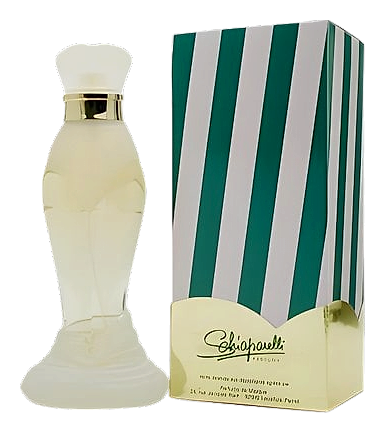
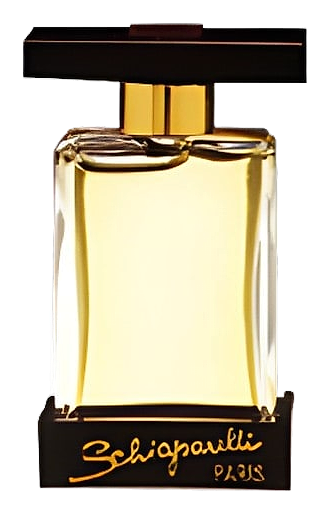
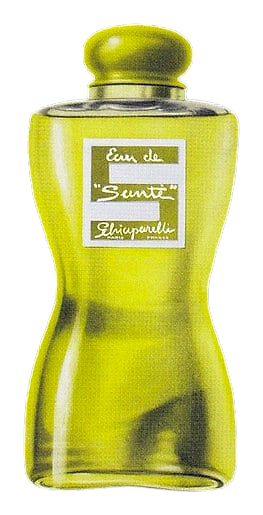
Soucis sits within Schiaparelli's 1930s perfume trio alongside Salut and Schiap, all commissioned with bottle design by Jean-Michel Frank. The trio marked a moment when a fashion house treated fragrance as a serious creative category, not a sideline. Each bottle shared Frank's restrained visual language, a counterpoint to the more ornamental vessels coming from other houses. The three scents were launched together as a statement of intent, proof that Schiaparelli intended to compete on every front. Today the trio is studied by collectors and perfumers as an early example of fashion-house perfumery done with full conviction.