The Story
Why it exists.
The beginning
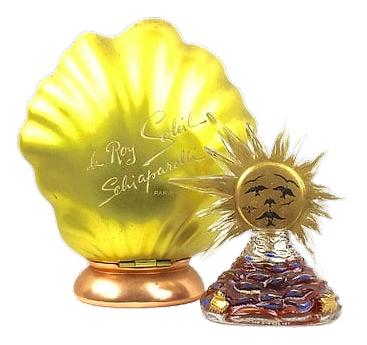
Le Roy Soleil arrived in 1946, created to mark the liberation of France. The name pays tribute to Louis XIV, the Sun King, and the fragrance was built to embody exactly that: radiance, warmth, the golden weight of something glorious. The bottle was designed by Salvador Dalí himself, based on his 1945 watercolor, and produced by Baccarat in a limited run of 2,000 gilded crystal flacons. It was perfume as art object, as victory, as declaration. The composition matches the ambition: bright citrus and tropical fruit opening, then deepening into a warm floral heart that carries the warmth of sunlit skin, settling finally into powdery musk and sandalwood that lingers close and intimate.
What makes Le Roy Soleil unusual is its structure. The pineapple in the top accord is unexpected, it gives the opening a sweetness that could read childish, but the lemon and bergamot keep it crisp. The heart is where the vintage character lives: cloves and cinnamon alongside rose and jasmine create an aromatic warmth that reads as warm skin rather than perfume. The drydown leans into powdery musk and tonka bean, that close, intimate finish that feels like something personal rather than performed.
The evolution
The opening is the star. Lemon and bergamot arrive bright and sharp, the pineapple giving a tropical sweetness that feels almost decadent. Within minutes, the heart takes over, rose and jasmine warmed by apricot, with cloves and cinnamon adding a spiced depth that keeps things interesting. The transition isn't dramatic; it's a slow hand-off, the citrus softening as the florals bloom. By the second hour, the drydown is in control. Musk and sandalwood create a powdery warmth that settles close to the skin. The vetiver adds a slight earthiness, and the tonka bean keeps it sweet without being sugary. The projection fades early, by hour three, it's a skin scent. But the drydown holds. Six hours in, there's still something warm and intimate waiting. On fabric, it ghosts for hours after you've left the room.
Cultural impact
Schiaparelli launched Le Roy Soleil in 1946 as a declaration of liberation. The name translates to 'The Sun King,' a direct nod to Louis XIV and France's emergence from occupation. This timing positioned the fragrance as a celebratory symbol of French resilience and artistic rebirth. The bottle design, with its surrealist influences, reflected the creative boldness that defined Schiaparelli's aesthetic vision. The fragrance's bright, triumphant character mirrored a nation's collective mood, making it a cultural artifact as much as a perfume.