
The Story
Why it exists.
The beginning
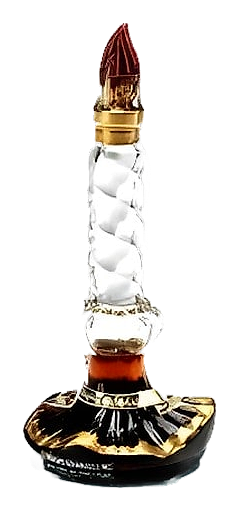
Elsa Schiaparelli launched Sleeping in 1938, billed as a night perfume with instructions almost disarmingly simple: spritz before sleep, let the scent illuminate the subconscious and light the way to ecstasy. The bottle was designed by Salvador Dalí, shaped like a crystal candlestick, because even a nighttime perfume in this house had to look like a Surrealist object. Jean Carles built the composition, a perfumer already famous for dense, unapologetic florals who treated restraint as just another ingredient to deploy at the exact right moment. The brief, as far as the record shows, was provocation softened into something intimate. A scent that doesn't perform so much as confess.
What stands out about Sleeping is the contrast between its green opening and its powdered heart. Galbanum is a resinous green that smells like crushed stems and bitter leaves, a note with the bite of something freshly snapped from a plant. Carles built an entire overture around it, letting the sharpness speak before the flowers arrive, a decision that gives the composition its bracing, almost bitter first impression. Then the florals land hard and old-fashioned, six of them at once, rose, jasmine, magnolia, orange blossom, carnation, ylang-ylang, no single one given permission to dominate.
The evolution
On application, you begin with a bracing green snap, galbanum doing what galbanum does, sharp, resinous, almost metallic, like biting into a stem you've no business biting. Bergamot softens the edges just enough to make it wearable, lending a brief citrus haze that keeps the bitterness from feeling academic. The green retreats and the flowers take over, not one at a time but in a single lush wave. Rose and jasmine carry the front, carnation adds its clove-edged warmth, magnolia cools things down, orange blossom and ylang-ylang sweeten the edges. The composition is dense in the way only Carles could make dense feel elegant, every bloom present but none shouting. As the florals begin to loosen their grip, the base starts to surface, patchouli and oakmoss grounding the bouquet, vetiver adding that green-woody shadow, sandalwood smoothing the architecture.
Cultural impact
Sleeping by Schiaparelli arrived in 1938 as an explicit invitation to wear fragrance in the bedroom, a category of perfume built around the hours when most other houses expected their customers to be finished with scent for the day. Elsa Schiaparelli herself had built her reputation on Surrealist collaborations with Dalí and Cocteau, and that spirit of artistic provocation ran straight through the perfume house. The bottle, designed by Dalí and shaped like a crystal candlestick, was part of the statement, a piece of Surrealist sculpture sitting on the dressing table before it was ever a container for juice.