
The Story
Why it exists.
The beginning
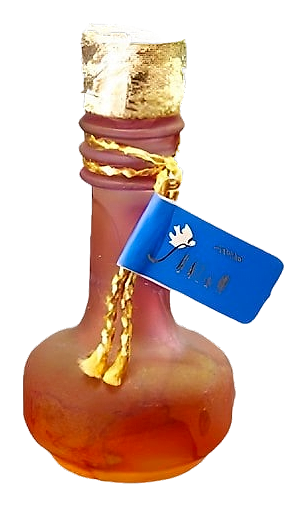
Shalom arrived in 1970 from Judith Muller, a perfumer whose portfolio reads like a biblical index, from Bat-Sheba to King David to Sharon. Her name appeared on fragrance lines developed in collaboration with a major fragrance house, and Shalom was among those early expressions, with sources loosely referencing a connection to International Flavors and Fragrances through her work. The name itself, Shalom, was never decorative for Muller. Her fragrances carried names chosen for meaning, each one anchored to a specific emotional territory. Shalom sits inside that philosophy: a chypre-fruity composition built to feel less like a passing trend and more like a statement of intent.
What makes Shalom structurally interesting is the conversation between its layers. The opening pulls sweet and spiced: bergamot, peach, plum, cardamom, palisander rosewood. That plum-cardamom pairing is deliberate and old-school, the kind of combination that defined chypre-fruity compositions in the late 1960s. The heart is dense: carnation, rose, nutmeg, orris, ylang-ylang, jasmine. Six materials doing the work that modern perfumery might hand to a single captive molecule. And the base, oakmoss, benzoin, amber, sandalwood, leather, vetiver, civet, is built like a fortification. That civet note is worth noting.
The evolution
The first fifteen minutes belong to the fruit. Bergamot lifts the plum and peach out of their syrupy potential, and the cardamom adds a dry, almost smoky heat beneath the sweetness. Palisander rosewood sits underneath, giving the opening a wood grain you can smell rather than see. It's bright but not delicate, the fruit dense enough to carry weight from the first spray. Then the transition. The florals arrive in a wave: carnation first, spicy and clove-adjacent, then rose and jasmine settling into the orris like powder into velvet. Nutmeg sharpens the edges, keeping the heart from turning too round. The heart phase is the loudest part of Shalom, the moment when the civet first shows itself as a warmth rather than an identifiable note, a low hum beneath the florals that gives the composition its animal pulse.
Cultural impact
Shalom occupies a specific corner of vintage fragrance collecting: a discontinued 1970 chypre from a perfumer most Western collectors encounter secondhand, if at all. The composition belongs to that mossy-spiced family of late-era chypres, sitting alongside other benchmark releases of the period in its use of oakmoss, civet, and a fruit-driven opening, though Shalom leans more overtly into plum and peach at the top than many of its contemporaries. For collectors working outside the mainstream channels, it represents an interesting entry from a house that built its identity around named narratives rather than mass-market positioning.