
The Story
Why it exists.
The beginning
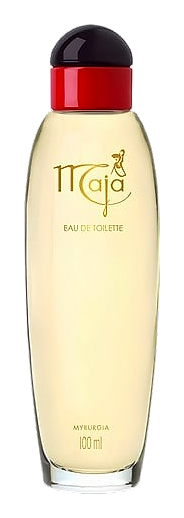
Maja arrived in 1921 from Myrurgia, the Barcelona house. The name carries Spanish weight, evoking the majas of Goya's canvases, women who held gaze and gave as good as they got. This was not a fragrance for shrinking violets. The brief was clear: create something that announced itself without apology, something that matched the confidence of the women who wore it. The citrus and geranium opening gave brightness, but the carnation and clove heart gave nerve. Patchouli in the base meant it would last, not fade politely after an hour, but stay and stay. The formula has endured with its original character intact, a testament to the structural integrity of its construction.
What makes Maja distinctive is the carnation. It's not a common note, it reads as almost medicinal spice, like cloves but greener, with a peppery edge that most modern fragrances avoid. Here it anchors the heart alongside nutmeg and lavender, creating a warm spicy core that never becomes heavy because the geranium and citrus up top keep pulling air through. The leather note is subtle, more of a warmth than an actual leather smell. And the oakmoss, a material now restricted in many countries, gives the base a mossy, slightly bitter depth that modern reformulations simply cannot replicate.
The evolution
The opening hits citrus-bright, geranium foremost, with orange blossom threading through. Within ten minutes the carnation arrives, spicy, almost green, asserting itself without waiting for permission. The clove and nutmeg follow, warming the heart into something substantial. Three hours in, the leather becomes apparent as a texture rather than a smell, a warmth that sits close to skin. The rose hasn't disappeared but it's quieter now, supportive rather than dominant. By hour five, patchouli and benzoin take over, with the tonka bean adding a dry sweetness that keeps the base from going bitter. Oakmoss lingers longest, that mossy, vintage depth that tells you this wasn't made yesterday. On fabric, it stays into the next day.
Cultural impact
Maja has earned a loyal following among enthusiasts of discontinued fragrances, respectable for a scent with no modern marketing. Wearers describe it as the scent of someone who walks into a room and doesn't need to announce themselves. The warm spicy character holds its own, though its floral heart keeps it from going fully dark. The carnation and oakmoss combination is what people remember, divisive, distinctive, impossible to mistake for anything in the current landscape.