Judith Muller
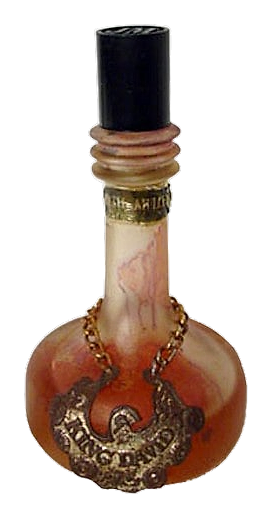
Judith Muller (1935-2012) built her career across two continents, carrying the scents of the Old World into a new nation. Born and educated as a chemist in Poland, she arrived in New York in 1965 and joined International Flavors & Fragrances as a lab assistant to perfumer Ellie Fox. That apprenticeship inside one of the industry's most influential houses gave Muller a grounding in raw materials, compounding, and the rhythms of commercial creation. The mid-1960s brought a return eastward, this time to Israel, where she established a cosmetics and fragrance house in Haifa around 1960. In a young country searching for cultural symbols of its own, Muller did something few had attempted: she composed the first Israeli national perfumes, anchoring them in biblical heritage. Her 1966 launch of Bat-Sheba and the subsequent release of King David offered the new state a fragrance vocabulary drawn from scripture, ancient ritual, and Mediterranean sensibility. Muller remained active through the 1980s, when Bat-Sheba was eventually discontinued, leaving behind a small but intensely collected body of work.
The hits
Notable creations


The signature
How Judith composes
Muller worked in the floral chypre and exotic oriental registers, drawing on the rich, resinous palette suited to Mediterranean and Middle Eastern tastes. Her compositions favored opulent florals grounded in mossy, animalic, and spicy bases, an architecture inherited from classical European perfumery but recalibrated for warmer sensibilities. She had a particular affinity for deep, lingering sillage, fragrances built to make presence felt in a room. Working from Haifa, she sourced and blended with the chemist's discipline she brought from Poland, balancing creative instinct with rigorous material knowledge. Her signature lay in that tension: ancient storytelling married to modern laboratory craft, biblical grandeur filtered through precise formulation.
Philosophy
What drives Judith
Muller believed fragrance could carry memory across generations, that a single breath might summon a palace, a garden, a desert dusk. Her creative approach married the precision of her chemistry training with an almost mythic sensibility, sourcing essences she described as having shamanic and sacred origins. Where many postwar perfumers chased European luxury codes, she reached for something older and more local, building scents that spoke to a specific people and place. She understood perfume as cultural artifact as much as adornment. Her biblical line, Bat-Sheba and King David, was conceived not as marketing but as civic offering, a way to give a young nation a scent it could call its own.
The houses
Maisons Judith composes for
In the same league