
The Story
Why it exists.
The beginning
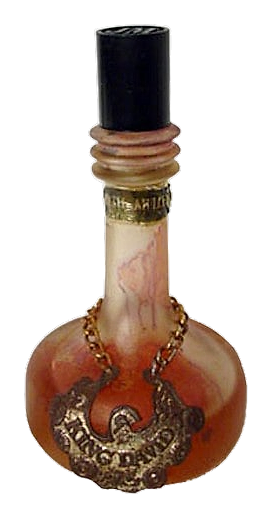
King David arrived in 1974, the work of Judith Muller, an Israeli perfumer with a catalog of biblical-named compositions. Bat-Sheva launched in 1966, and King David followed as part of a growing series that took its names from scripture rather than abstract concepts. The naming ran deep for Muller. Her fragrances carried Old Testament weight, each one anchored to a specific figure from the Hebrew Bible. King David sits within that approach: a composition built around the figure of the warrior-poet king, a man who wrote some of the most quoted lines in human history. The fragrance takes the shape of a fougère, the classic aromatic-chypre structure that dominated masculine perfumery through the mid-century, and it pulls in lavender, rosemary, and bay leaf for the opening.
What gives King David its distinctive character is the material at the heart of the composition. Carnation and cinnamon, paired with aldehydes and pine, create a center that pulls away from the standard fougère template. The carnation contributes a warm, almost burnt-sugar quality, a clove-like edge that deepens the spice without overwhelming it. Cinnamon adds sweetness with heat, the kind of warmth that has a long history in perfumery as a fixative and a comfort note alike.
The evolution
The first fifteen minutes are sharp and green. Lavender, rosemary, and bay leaf crackle against petitgrain and bergamot in a way that feels more herb garden than grooming counter. The rosemary carries a resinous snap, and the bay leaf adds that slightly bitter, almost medicinal edge that keeps the opening honest. Then the aldehydes lift the whole thing briefly, a quick sparkle before the warmth arrives. The transition is fast but not abrupt. Carnation, cinnamon, rose, and geranium settle into the center around the thirty-minute mark, and the pine underneath keeps the composition from going soft. The fougère notes hold the shape, but the carnation gives it that burnt-sugar, clove-like edge that reads as something more devotional than a standard masculine. The rose and geranium add a floral cushion between the spices and the herbs, a buffer that keeps the two sides from fighting.
Cultural impact
King David belongs to a category of fragrance that has largely fallen out of circulation. The composition launched in 1974 as part of Judith Muller's catalog of biblical-named work, and it represented a particular moment in Israeli perfumery when a domestic industry was producing compositions rooted in local narrative and scripture. Muller's approach set her work apart by drawing directly from Old Testament figures rather than chasing European trends or American mass-market formulas.