The Story
Why it exists.
The beginning
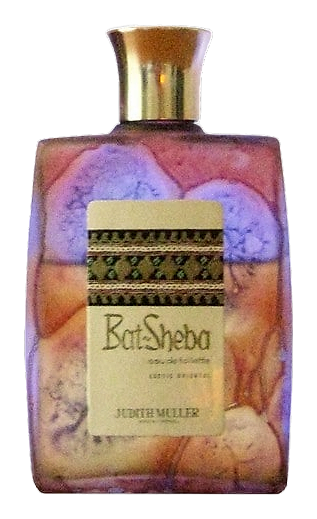
Bat-Sheba Exotic Oriental arrived in 1968, a release from Judith Muller's house that quickly established itself as a benchmark in fine perfumery. Muller built her reputation on compositions that carried thematic weight, each named for a figure whose story carried gravity. Bat-Sheba, the cornerstone of the line, was soon joined by Exotic Oriental, conceived to amplify the incense thread that ran through the line. The fragrance was created by Sophia Grojsman and Ernest Shiftan, with Grojsman in the early phase of what would become one of the most consequential careers in 20th-century perfumery. Here she was already pushing frankincense further forward than convention allowed, treating it less as a base note and more as architecture.
What makes Exotic Oriental distinctive isn't any single material but the hierarchy it imposes. Frankincense isn't a supporting player here; it's the protagonist, and everything else, the dusty rose, the carnation spice, the smoky vetiver, is built to flatter it. Grojsman places it at the center and lets the other notes orbit. The aldehydes at the top give it an almost cold lift before the resin takes over, creating a tension between brightness and depth that the wearer feels as a kind of restrained drama. It's a chypre that doesn't want to be read as merely floral or merely spicy.
The evolution
The first 15 minutes feel almost ceremonial. Aldehydes flash cold and clean, carrying bergamot and a whisper of lavender, and for a moment it could be any polished French classic. Then the frankincense arrives. It doesn't tiptoe. It descends through the composition like smoke settling into a cathedral, and the rose underneath begins to darken, picking up the spice of carnation and the powder of orris. By the second hour, the floral heart has been almost entirely subsumed. What remains is resin, benzoin, oakmoss, and a leather-vetiver drydown that sits close to the skin but doesn't disappear. The base reveals itself slowly, with castoreum and amber warming the shadows that the earlier florals left behind. The drydown clings to fabric with a tenacity that feels almost stubborn, animalic and warm, the last echo of something that started bright and ended deep.
Cultural impact
Bat-Sheba Exotic Oriental sits in an unusual position: a 1968 composition from a perfumer whose instincts showed themselves early and clearly. Sophia Grojsman's work here demonstrates a willingness to push single materials beyond their conventional roles, a tendency that would come to define her later career. The frankincense-forward structure that anchors the fragrance takes a material most perfumers of the era treated as a background accent and places it at the center of the composition.