The Story
Why it exists.
The beginning
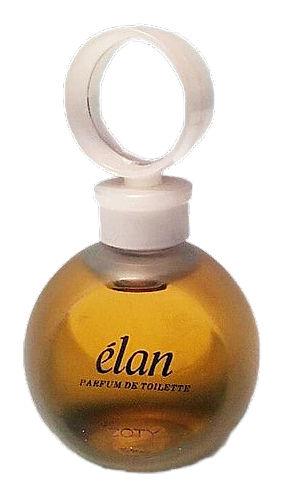
Élan arrived in 1968 from Coty, a house that had spent decades refining aldehydic florals into something recognizable and refined. By the late sixties the genre still carried authority, but the formulas were loosening, picking up green leaves and oakmoss along the way, letting the brightness give way to something earthier underneath. Élan was built for that exact pivot, aldehydic enough to feel composed, green enough to feel awake. The top notes crack open with aldehydes, bergamot, and green stems, sharp and cool, almost like the moment before a perfume settles into skin. It reads as powdery and bright at once, the kind of opening that announces itself without raising its voice.
What makes Élan worth noticing is how it bridges two perfumery traditions in a single composition. The aldehyde-led opening reads bright and powdery, a clean shimmer that has become a signature of mid-century florals. But the base reaches for oakmoss, patchouli, and civet, materials that give the chypre family its structural backbone and its slightly animal warmth. You're wearing both chapters at once, the soliflore softness up top and the mossy depth below, layered without apology.
The evolution
The aldehydes lead the way, a fizzy brightness that reads almost metallic before the bergamot rounds it out. The green notes come in fast, fresh and cool, like crushed stems rather than cut grass. Then the orris and Damask Rose arrive, and the whole thing turns powdery, soft-spoken, the texture of compact makeup pressed into a velvety puff. Jasmine and gardenia add warmth underneath, gardenia creamy and tropical, jasmine sharper and more animal. The carnation brings its clove-spice edge, a peppery warmth that keeps the florals honest, while lily of the valley cools the whole arrangement with a green-soapy lift. As the composition wears, the base takes over, and the civet shows up with its fur-like warmth, animal and intimate, sitting under the sandalwood and cedar. Oakmoss keeps it grounded, earthy and damp, while patchouli adds its dark, slightly bitter hum.
Cultural impact
Élan sits in a specific corner of late-sixties perfumery, the aldehydic floral with a chypre base, a structure that rewards patience and rewards it generously. Vintage bottles turn up on collector shelves, sought after by wearers who know exactly what they're looking for: the powdery iris, the civet warmth, the kind of composure that comes from a formula confident enough to let its animal notes breathe. It's a fragrance for someone who treats scent as wardrobe, not accessory, the kind of composition that announces a sensibility rather than chasing a trend.