
The Story
Why it exists.
The beginning
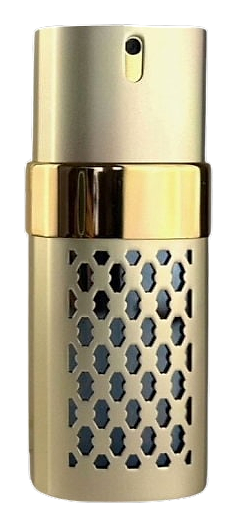
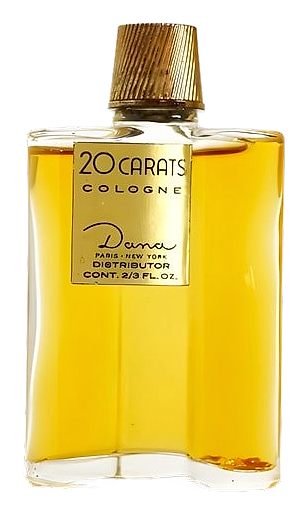
20 Carats arrived in 1933 as Dana's second fragrance, the same year the house introduced Bolero, another jewel-inspired name that spoke to Dana's love of metaphor and material. Where Tabu had announced Dana's arrival with oriental audacity, 20 Carats chose a different register: the warm amber of restraint, cherry and whiskey arranged like an Old Fashioned on a vanity table. The name itself was a statement, precious, weighted, something you keep rather than use up. Dana had only just begun in Barcelona when this composition went to market, yet it reads like a house already confident in its own mythology.
What makes 20 Carats unusual is its structure: a Chypre Fruity classification that places it somewhere between the classic 1950s chypre template and the oriental richness Dana would become known for. The whiskey note, rare in 1933 women's fragrance, signals ambition. Not alcohol as trend, but the real thing: boozy warmth that opens like a bar door, then yields to cherry tobacco and carnation as the drydown deepens. Oakmoss anchors the whole thing in mid-century glamour, the kind of moss that doesn't exist anymore in perfumery's modern reformulations. That's what makes vintage 20 Carats feel like a time machine.
The evolution
The first hour belongs to whiskey and orange, bright, boozy, the smell of a bar before it gets crowded. Cherry arrives within twenty minutes, sweeter than you'd expect, muddled with carnation's spice. The heart phase is where 20 Carats earns its name: tobacco and myrrh settle in like a conversation that started at the door and moved to the corner booth. Oakmoss surfaces through the mid-drydown, that green-earthy backbone modern perfumery nearly lost entirely. The final act is powdery-warm, tonka bean, musk, a ghost of star anise, clinging to fabric and skin for eight to ten hours. On clothes, it waits until the next wearing.
Cultural impact
20 Carats exists in a particular historical moment: 1933, when women's fragrance was still finding its nerve. The whiskey note was uncommon, the oakmoss backbone already classic. Compared to Tabu's provocative orientalism, 20 Carats offered a different proposition, sensuality with structure, warmth with restraint. Wearers who discover vintage bottles describe it as a time capsule of mid-century glamour, a fragrance that smells like old photographs and borrowed smoke.