
The Story
Why it exists.
The beginning
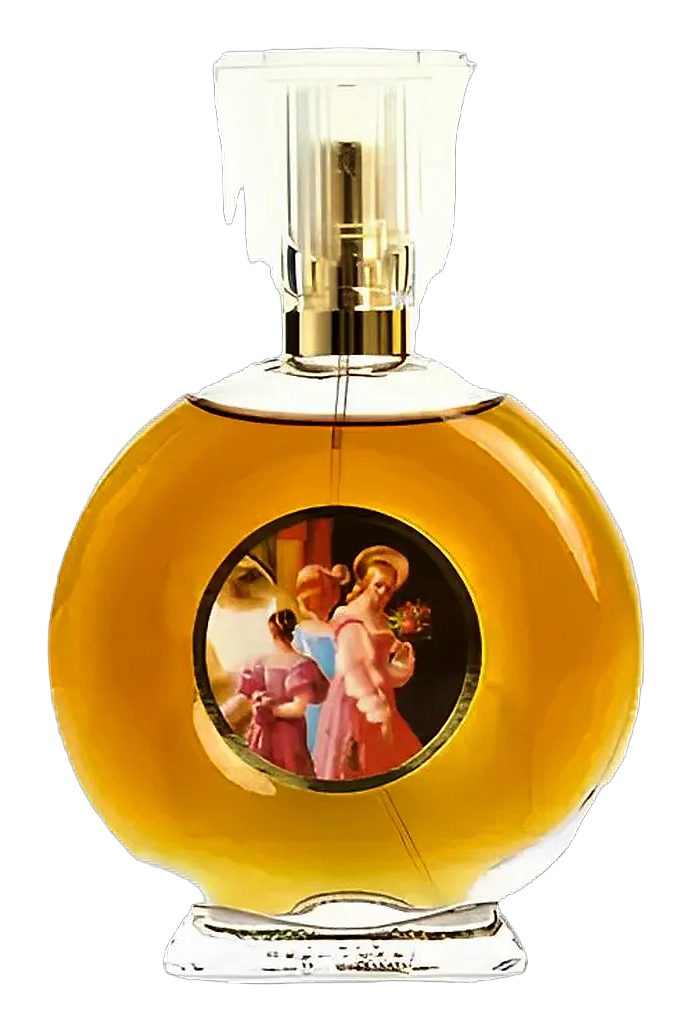
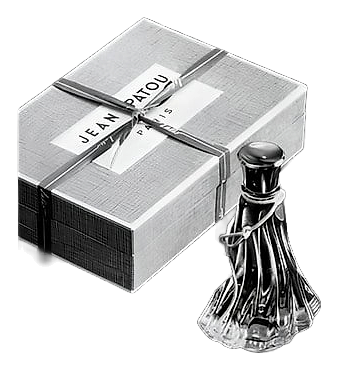
Jean Patou called it a secret weapon. Released in 1956 by perfumer Guy Robert, Lasso entered a lineup that already included the legendary Joy, and somehow carved its own territory. Where Joy was opulence unchecked, Lasso was something else: composed, layered, with a leather character that owed everything to the house's tannery roots in Normandy. Robert built the fragrance around a tension that feels almost defiant, powdery florals meeting animalic depth, fruity sweetness held in check by oakmoss and civet. It wasn't trying to be polite.
What makes Lasso structurally interesting is the peach. It sits at the top of the pyramid, but in a composition this dense, it becomes a bridge, a liaison between the bright opening and everything that follows. The carnation and heliotrope give it powder before the base arrives to make it official. Guy Robert didn't use peach as a simple fruity note; he embedded it in a chypre structure where leather, civet, and oakmoss are the scaffolding, not the decoration. That's not a common move. Most peach fragrances stay light. This one lets the peach argue with the leather and wins.
The evolution
The first thirty minutes announce everything at once. Peach, carnation, heliotrope, a flash of fruity sweetness, layered so densely that individual notes compete for attention. One reviewer described it as prismatic: flashes of different facets from moment to moment. Give it an hour and the floral heart asserts itself, rose, iris, jasmine, violet, wrapped in a soft leather that hasn't loosened its grip. The base is where patience pays off. Civet, musk, vanilla, amber: the animalic notes don't disappear. They deepen. Settle against the skin like a second layer, close and warm, lasting past the point where most EDT concentrations bother to stay. The oakmoss and sandalwood linger longest, that powdery-woody drydown that made classic chypres famous. On fabric, it outlasts the workday. On skin, it softens before it vanishes.
Cultural impact
Lasso was discontinued, which means it lives now in vintage bottles and on those who've sought it out deliberately. The fragrance community treats it as an undiscovered Patou, less celebrated than Joy, less discussed than Vacances, but richer in complexity for those who find it. Its 1956 positioning as a secret weapon suggests the house understood what it had made: not a crowd-pleaser, but something that worked on the right person in a way nothing else could.