The Story
Why it exists.
The beginning
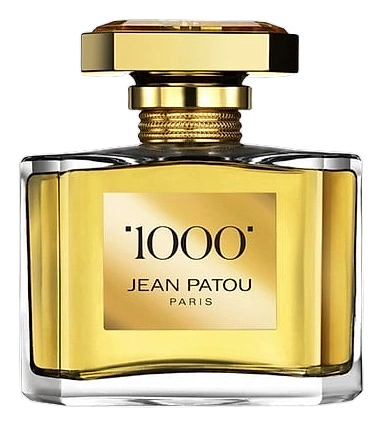
In 1972, Jean Kerléo created 1000 as a statement about restraint and abundance. The name says it all, a single number, maximalist intent. Where other houses layered and complicated, Patou distilled. The fragrance carries that tension: named for abundance, built around a single decision to commit fully to one idea. It is chypre, but not as you might expect, this is osmanthus and rose doing the work, doing it completely, and refusing to apologize for taking up space.
The osmanthus note is the key. It smells like apricot, like bruised petals, like the moment before jam becomes jam. In 1000, it sits at the top alongside violet leaf, that green, almost metallic note that keeps the sweetness from becoming syrupy. Together, they create an opening that is fruity without being juvenile, green without being sharp. Then the heart opens: rose and jasmine, lily of the valley and geranium. This is where Patou's couture heritage shows, the floral abundance is structured, not chaotic. The composition breathes.
The evolution
The first hour is osmanthus doing its work, softened by violet. By hour two, the rose and jasmine have fully arrived, this is the heart of 1000, rich and enveloping. The lily of the valley adds a quiet green undertone that keeps the florals from feeling heavy. By hour three, the oakmoss and patchouli settle in, and the sillage shifts from bold to present, still there, still noticeable, but no longer announcing. The drydown is where 1000 earns its name: sandalwood and oakmoss, warm and close, lasting for hours on skin.
Cultural impact
1000 launched in 1972 during a period of transition in perfumery, when the industry was shifting away from the heavy florals of the mid-century toward lighter, more transparent compositions. Jean Patou chose to go against that grain, releasing a fragrance that doubled down on richness, complexity, and presence. The result became a reference point for what a classic floral-chypre could achieve when not constrained by modern restraint. Over five decades, it has maintained its status not as a museum piece but as a living fragrance, worn by generations who find in it something that newer compositions have not replicated. The osmanthus note alone makes it distinctive among its peers, a marker of a specific aesthetic that the perfume world has never fully moved past.