The Story
Why it exists.
The beginning
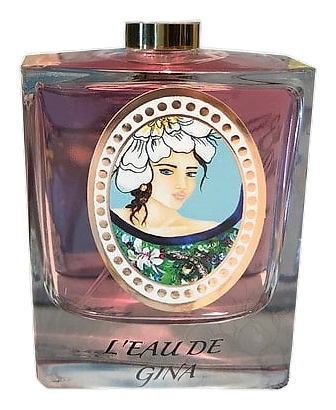
L'Eau de Gina was composed by Nathalie Feisthauer in 2018 for Au Pays de la Fleur d'Oranger. The fragrance takes the form of a portrait rather than a study of a single flower, balancing sweetness against a more grounded, slightly mysterious undertone. Gina reads as a character sketch in scent, a woman built from candied fruit, rose, and a final twist of black licorice that keeps the composition from drifting too prettily into the purely confectionary. The bottle illustration by Claudia Bonino gives the fragrance a face, half-goddess, half-memory, an image that lingers on the vanity long after the spritz has settled. There is a deliberate storytelling at work here, the kind that treats a perfume as a small world to inhabit rather than a passing impression.
The composition moves through candied fruit and rose before landing on black licorice, an unusual anchor for a floral gourmand. The sugar and spice notes in the heart create a confectionery warmth, and the leather threads its way through, adding something rougher alongside the rose's softness. The interplay between the sugary fruit facets and the deeper, more resinous materials gives the scent its particular tension, a push and pull between the edible and the aromatic.
The evolution
The first ten minutes belong to bergamot and mandarin, bright and lifted, almost like stepping into a kitchen where marmalade is just starting to cool. The fruit deepens quickly, candied rather than fresh, as rose slides in beside a dusting of spice and sugar. The heart unfolds gradually, each material taking a turn at the front: the rose comes forward with a jammy roundness, the spices bring a gentle warmth, and the candied fruit notes add a sticky, almost resinous sweetness that clings to the fabric of the scent. As the composition settles, leather arrives and the sweetness shifts in register. It gains a darker current, something warm and slightly animal, a hint of something rougher pressing against the confection.
Cultural impact
L'Eau de Gina occupies a distinctive place among rose compositions, a fragrance that takes the flower as its starting point but refuses to behave like a straightforward soliflore. The black licorice base reshapes what a rose scent can be, pulling the composition toward something more layered and savory, a sweetness laced with a darker herbal edge. The combination of candied fruit, rose, warm spices, leather, woods, and aniseed creates a profile that reads as gourmand but resists the usual confections of the genre.