The Story
Why it exists.
The beginning
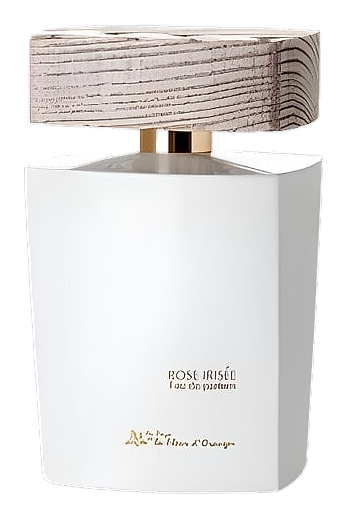
Rose Irisee arrived in 2014 from Jean-Claude Gigodot, built around a single premise: what happens when rose and iris share the stage rather than one playing supporting role to the other? The Au Pays de la Fleur d'Oranger house had already given individual flowers their own dedicated compositions, violet, jasmine, lavender. Rose Irisee pushed further, asking whether two florals could coexist as equals without one disappearing into the other. Gigodot chose the Chypre Floral structure for exactly this reason: the classical architecture provides enough framework for two strong personalities to hold their ground.
The unusual choice of vermouth as a top note sets this apart from standard rose compositions. Rather than the expected citrus brightness, the bitter, aromatic quality of vermouth creates a dry opening that makes the subsequent rose and iris feel earned rather than announced. Combined with bergamot and orange, the top creates an unexpected coolness that contrasts sharply with the warmth waiting underneath. This tension, between the cool opening and the warm heart, is what gives Rose Irisee its distinctive character and keeps it from reading as another sweet floral.
The evolution
The opening hits sharp and aromatic. Bergamot, orange, and vermouth arrive together, the vermouth doing the heavy lifting, adding a bitter complexity that most florals avoid entirely. It reads almost medicinal for the first few minutes. Then the hand-off begins. Iris emerges first, powdery and slightly bitter, asserting its presence before rose has a chance to dominate. The rose follows, warmer, rounder, with an almost overripe lushness that could be described as 'carnal.' Almond and ylang-ylang deepen the heart, adding an oily sweetness that sits beneath the florals like a warm undercurrent. This is the fragrance's most complex phase, florals and nuts in tension, neither quite winning. By hour three, the base takes over. Cedar leads, with sandalwood and patchouli providing earthy depth. The vanilla finally arrives here, softening the wood into something that reads warm rather than sharp. Musk keeps everything close to the skin, making the drydown intimate rather than projecting.
Cultural impact
Rose Irisee fits within a niche perfumery approach that treats individual flowers as complete subjects rather than ingredients. The choice to give rose and iris equal billing represents the house pushing its own philosophy further, asking not just what one flower can express, but what happens when two strong florals are forced into conversation. The 2014 launch placed it in a period when niche houses were exploring florals as alternatives to the loud orientals and fresh aquatics dominating the broader market.