The Story
Why it exists.
The beginning
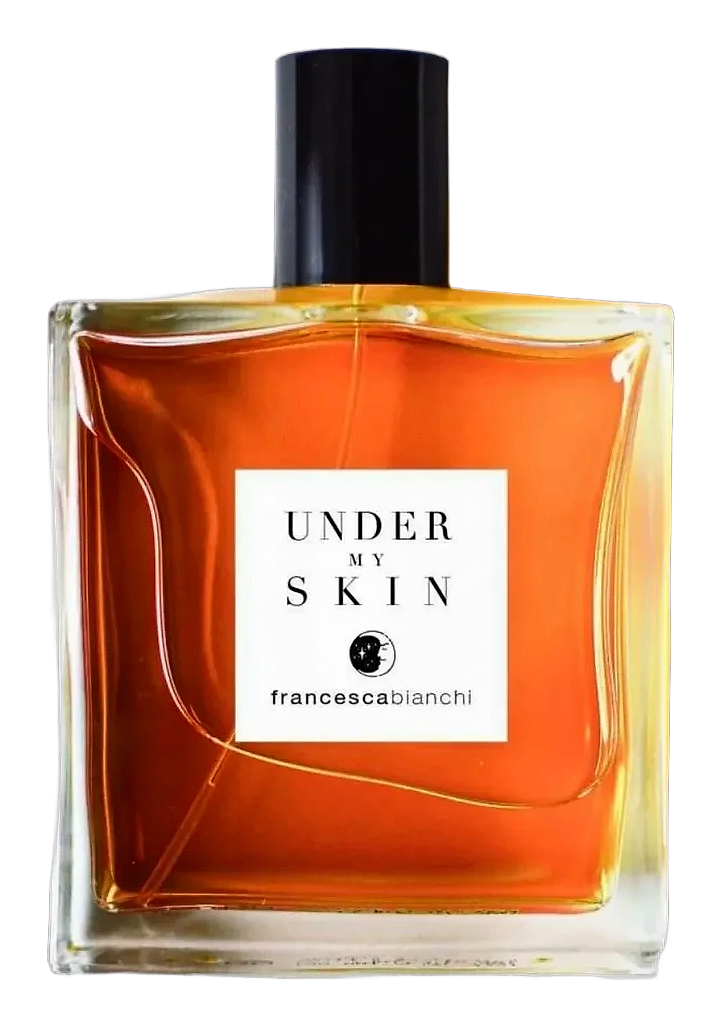
The name came from a conversation with an artist and fragrance lover, who told Francesca Bianchi it was as if the scent emanated from her skin, rather than being applied from outside. Bianchi had been working on this for around two years before that conversation, the animalic direction had pulled her in, but what she found herself chasing wasn't what she expected to create. She was drawn to strong animalic scents first. But through the process of elimination, removing what went too heavy, too sweet, too stable-like, she arrived at something tamer and more intimate. More human than animal, but not by much. That conversation sealed it. If the scent felt like it came from skin rather than a bottle, then the name was right there waiting: Under My Skin. The concept of something emanating rather than layering. Of being the thing underneath rather than the thing on top. The direction crystallized from that moment. Leather. Castoreum. Powdery iris.
Bianchi chose to build around leather and castoreum, both assertive, animalic materials, but then did something counterintuitive. She didn't amplify them toward the overt, sweaty animalics that draw people to the genre. She softened them. Tamed them with orris butter, with vanilla. Walked them down a path that ends in powdery elegance rather than raw animal thrust. The costus and oakmoss in the base deserve attention too. Costus, an undertone often described as having a warm, haylike animal quality, was restricted or banned in many markets due to IFRA regulations. Finding it in a modern niche release suggests Bianchi wasn't hedging on material authenticity.
The evolution
The opening hits firm. Black pepper and lavender arrive with intention, spicy, slightly medicinal, a sharp curtain call before the main event. The grapefruit is in the background, fleeting, there to cut the warmth before it settles. This phase lasts about thirty minutes if you pay attention. Then the spice relents. Carnation and iris take over in the heart phase. Carnation brings body heat without sweetness, something prickly and alive. Iris contributes that waxy powderiness that makes fragrances feel old in the best possible way. The Bulgarian rose doesn't soften this. It complicates it, adds an edge of complexity that says this isn't a straightforward powder bomb. This phase carries 2-3 hours easily. The drydown occupies the remaining time. Leather and castoreum stay present but intimate, close to skin, not projecting. Then vanilla and tonka bean begin their slow build. By hour six, they're holding the composition together. Ambergris provides an undercurrent that lifts slightly without pushing forward. Sandalwood and costus round the base.
Cultural impact
Under My Skin earned its place among collectors who know what they want and won't compromise to find it. Francesca Bianchi's background in art history and olfactory chemistry shows in the precision of the concept: animalic without getting dirty, leathery without getting heavy, powdery without becoming a skin scent that disappears. The 2017 launch positioned Bianchi's work as a study in restraint, not what you add, but what you choose to leave out. Collectors who track the niche market in depth note this kind of deliberate minimalism as a marker of an independent house that knows its own aesthetic. The fragrance doesn't try to be everything. It tries to be this.