The Story
Why it exists.
The beginning
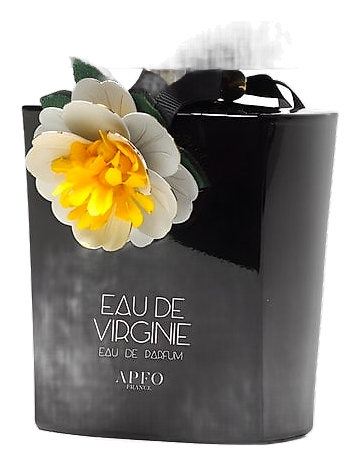
Eau de Virginie is named for Virginie Roux herself, one of the house's founders. Jean-Claude Gigodot was tasked with capturing something essential about her, not a portrait, exactly, but an essence. The brief: take one woman and translate her into tuberose, mimosa, gardenia, ylang-ylang, and let the flowers do the talking. Released in 2017.
What makes this composition unusual is the sheer density of white florals stacked in the heart. Most fragrances use one or two as a bridge. Gigodot built the middle from four. The result is a tuberose that has nowhere to hide, no green leaves, no aquatic accord, no spice to soften it. Just bloom after bloom, layered until the effect becomes something more sculptural than olfactory. The cardamom and pink pepper at the top exist precisely to give that floral wall something to push against.
The evolution
The opening arrives sharp and aromatic, cardamom and pink pepper creating a brief, electric tension before the florals charge through. By the time you reach the heart, the tuberose has commandeered everything. It doesn't whisper. It fills. The gardenia and mimosa layer underneath, adding a powdered warmth that keeps the whole thing from feeling cold or metallic. Then, slowly, sandalwood rises. Vanilla follows. The flowers don't disappear, they bend. They become less a statement and more a memory of a statement. On fabric, this drydown holds for hours. On skin, expect the full arc to complete around the eight-hour mark.
Cultural impact
ÇaFleureBon called it 'uninhibitedly, shamelessly floral in a celebratory manner', which captures the spirit well. It won an Art & Olfaction Award, placing it in a small category of niche fragrances that find mainstream traction without softening their edges. The tuberose-forward structure puts it in conversation with Frédéric Malle's Carnal Flower and Serge Lutens Tubéreuse Criminelle, though Gigodot's version leans warmer and less metallic.