The Story
Why it exists.
The beginning
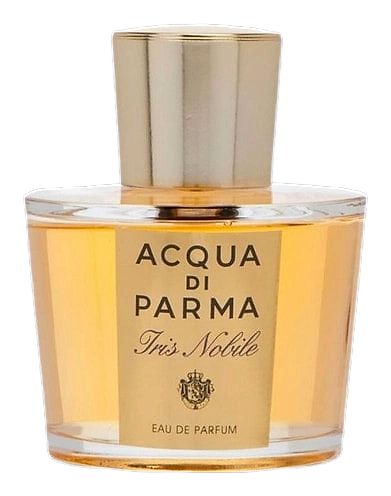
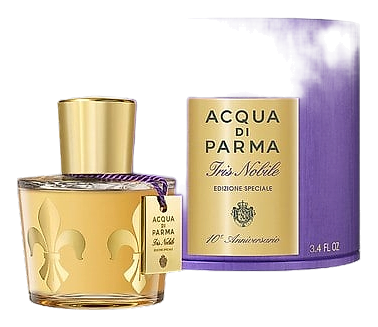
When Acqua di Parma set out to celebrate the tenth anniversary of Iris Nobile, the house turned to perfumers Francoise Caron and Francis Kurkdjian to honor the original in style. The composition itself remained untouched, because the scent had already proven itself. What changed was the vessel. The anniversary edition arrived in a 100 ml flacon dressed with hand-made 18-carat gold decorations inspired by iris petals, wrapped in a deep purple cylindrical case that placed the flower itself at the center of the presentation. It was a limited collector's piece, and production was reportedly discontinued. The juice stayed exactly as it was: an iris-forward floral wrapped in golden warmth.
The original Iris Nobile built its reputation on a particular tension that few iris fragrances manage well: the powdery root note without the chalky austerity that makes the material feel old-fashioned. Star anise does the heavy lifting in the opening, adding a licorice-sweet coolness that keeps the iris from collapsing into face-powder territory. The heart pulls in multiple white florals, including ylang-ylang and tuberose, but the cedar underneath prevents the bouquet from becoming a confection.
The evolution
The first ten minutes belong to the iris and star anise, with bergamot and mandarin lending a brief citrus lift before the florals take command. The heart settles in around the 30-minute mark: ylang-ylang, tuberose, mimosa, orange blossom, and hibiscus stack into a lush, creamy bouquet that has a slightly sunburned warmth to it. This is the longest phase of the wear, holding court as the florals slowly recede into the base. The base is unexpectedly quiet, just amber and vanilla, which means the fragrance doesn't announce itself in the drydown so much as fade gracefully into a skin-warmed, golden-haze finish. The iris stays present throughout, threading the opening, the heart, and the drydown together like a single continuous breath.
Cultural impact
The 10th anniversary bottle was a flex, not a formula change. Acqua di Parma chose to keep the Iris Nobile composition exactly as it was, letting collectors experience the original juice inside a newly designed flacon. The hand-made 18-carat gold decorations and the deep purple cylindrical case reframed the fragrance as a special occasion object, the kind of release that lives in display cabinets as much as on vanities. The limited nature of the run, combined with its reported discontinuation, turned this edition into a sought-after piece for anyone interested in the visual and material side of perfume collecting.
The House
Acqua di ParmaBaron Carlo Magnani created Acqua di Parma in 1916 as his own signature scent. What began as one fragrance has become synonymous with Italian sophistication. Colonia, the house's founding creation, holds the distinction of being the first true Italian Eau de Cologne, and it remains unchanged today. Over a century later, the house still captures the essence of la dolce vita, pairing Mediterranean brightness with an understated luxury that appeals to those who prefer refinement to ostentation.
The Creator
Francoise CaronCaron gravitates toward luminous, translucent fragrances. She works comfortably with crisp citrus, transparent florals, and crisp green or aquatic notes, building structures that feel weightless rather than layered.